The Power Hunger: Can AI Survive the Global Energy Crisis?

Key Takeaways
- Energy-Constrained Compute: AI growth is hitting an “Infrastructure Wall” as the demand for 24/7 baseload power exceeds the current capacity of the aging national grid.
- The Energy Tax: Pure-play software valuations are currently mispriced because they ignore the rising cost and physical scarcity of electricity required to power large language models (LLMs).
- Investment Pivot: Institutional capital is rotating from high-multiple SaaS firms toward hard-asset infrastructure, specifically regulated utilities and nuclear energy providers.
- Structural Deficit: The disconnect between rapid software innovation and the slow permitting process for energy infrastructure is creating a systemic supply bottleneck for the tech industry.
For the past decade, the tech sector operated under the assumption that compute was infinite. If you needed more processing power, you simply spun up more instances in the cloud. Software was scalable, marginal costs were near zero, and the digital economy felt decoupled from the physical constraints of the real world.
That era has ended. The rise of Generative AI has brought the industry face-to-face with a sobering reality: Intelligence is no longer just a software problem; it is a thermal and electrical one. We are currently witnessing a collision between the most aggressive capital expenditure cycle in history and an aging, fragile power grid. For investors, this marks the most significant regime shift since the inception of the cloud.
1. The AI Energy Crisis: Why Data Center Power Demand is Straining the Grid

The numbers are staggering. Hyperscalers—Microsoft, Google, Meta, and Amazon—are pouring hundreds of billions of dollars into capital expenditures (CapEx) specifically for AI infrastructure. This is not just a marginal increase in spending; it is a parabolic acceleration. We are moving from the era of “smartphones and web apps” to the era of “factory-scale compute.”
However, the industry has hit an “Infrastructure Wall.” Modern AI data centers are no longer the 50-megawatt facilities of the past; they are emerging as 500-megawatt to 1-gigawatt behemoths. According to the International Energy Agency (IEA), electricity consumption from data centers could double by 2026. The existing electrical grid was never designed to deliver this level of concentrated, 24/7 baseload power.
In many developed markets, the interconnection queues—the waiting list for new power projects to connect to the grid—stretch for years. These queues often end in rejection due to local transmission constraints, as highlighted by reports from the Department of Energy (DOE). This has shifted from a localized technical bottleneck to a systemic macro-economic threat. When industrial-grade compute becomes energy-constrained, the “AI rollout” risks stalling. The result is a looming energy deficit that threatens to throttle the very productivity gains investors are banking on.
2. Why Pure-Play Software is Facing a Valuation Reckoning

Wall Street is currently mispricing the “Energy Tax” on growth. Current valuations for high-multiple Cloud Computing and SaaS providers assume a frictionless scaling environment. Analysts often extrapolate revenue growth based on user adoption, but they rarely discount these models for the cost—and potential unavailability—of the power required to train and run those models.
The Energy Tax on Growth
As power prices rise, the gross margins of AI-reliant cloud providers face secular pressure. When electricity moves from a minor line item to a significant operational expense, the profitability profile of LLM-heavy services changes. Furthermore, the “energy ceiling” creates a hard cap on supply. If a cloud provider cannot secure the power to run more GPUs, their ability to meet demand is effectively zeroed out, regardless of how robust their software product might be.
The Rotation Thesis
Investors must begin to distinguish between “compute-efficient” software and “compute-hungry” software. Pure-play software companies that rely on massive, unoptimized model training and inference cycles are essentially leveraged bets on energy prices. We are seeing the early stages of a market rotation: moving capital out of high-multiple software firms that ignore their carbon footprint and into companies that own the “picks and shovels” of the energy transition. If compute is the new oil, the companies that own the refinery—and the power plant—have more pricing power than the companies selling the digital product.
3. Investing in AI Infrastructure: Why Utilities and Nuclear Power are the New ‘Must-Own’ Assets
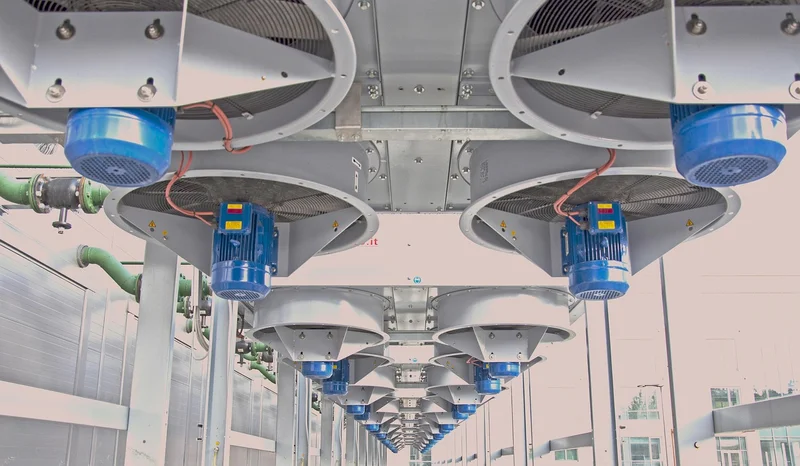
If the AI boom is constrained by energy, then the value capture will migrate upstream from the software layer to the energy generation layer. This is not just a tactical shift; it is a fundamental pivot toward ESG Investing and hard-asset infrastructure.
The Case for Regulated Utilities
Regulated utilities are emerging as the defensive hedge of choice. Unlike software, their revenue is tied to essential service delivery, and they operate under government-sanctioned monopolies. As the demand for grid modernization explodes, these entities are uniquely positioned to pass costs through to ratepayers and hyperscalers alike. They are no longer the “boring” bond proxies of the portfolio; they are the gatekeepers of the AI revolution.
The Nuclear Renaissance and SMRs
Solar and wind are essential, but they cannot provide the high-density, 24/7 baseload power required by data centers. This has triggered a genuine Nuclear Renaissance. Small Modular Reactors (SMRs) are increasingly viewed by BlackRock and other major institutional players as the only viable solution to power massive, standalone data center campuses.
Nuclear provides the stability, high energy density, and zero-carbon credentials that hyperscalers demand for their sustainability mandates. Companies involved in the nuclear supply chain—from uranium fuel providers to SMR design firms—are shifting from fringe investments to “must-own” infrastructure assets. When a tech giant signs a 20-year power purchase agreement (PPA) with a nuclear plant, that plant effectively becomes the most valuable asset in the entire AI ecosystem.
4. Strategic Positioning for Institutional Allocators in an Energy-Constrained World
For institutional allocators, the strategy must evolve. The old playbook of investing in “tech as a growth engine” is insufficient in an energy-constrained world.
Capitalizing on Grid Monopolies
Investors should focus on grid-equipment manufacturers—the firms that make the high-voltage transformers, switchgear, and power management systems. These companies possess significant pricing power because they are currently sold out for years. They are the true beneficiaries of the AI surge, and unlike software companies, they do not face the risk of disruption by a better algorithm.
Risk Mitigation Framework
Pension funds and Sovereign Wealth Funds should treat energy-backed assets as a core component of their tech exposure. By investing in renewable projects, nuclear operators, and utility grid upgrades, allocators can capture the “tax” that hyperscalers must pay to continue their operations. This provides an inherent hedge: if AI grows, your energy assets win; if AI struggles due to energy shortages, your energy assets become even more scarce and valuable.
The Regime Shift: From Software to Hard Assets
We are witnessing a transition from a software-led economy to an energy-constrained compute reality. In this new regime, the winners will not be the companies that write the best code, but the companies that control the power that makes that code run.
The “AI energy crisis” is not merely a hurdle to be cleared; it is the defining investment theme of the next decade. As we look ahead, the smart money will be moving away from the ephemeral valuations of pure software and into the immutable, physical reality of the power grid. Intelligence is no longer just bits and bytes—it is Joules and Watts. It is time for institutional portfolios to reflect that change.
Disclaimer: This post is for informational purposes only and does not constitute financial, investment, or legal advice. Investors should perform their own due diligence or consult with a qualified advisor before making any investment decisions.