Why the AI Data Center Energy Boom is Changing the Grid Forever
For over two decades, the playbook for generating institutional alpha was deceptively simple: find scalable software, ride the wave of near-zero marginal costs, and watch asset-light business models compound at software speeds. Venture capitalists and public market investors alike chased the elusive SaaS (Software-as-a-Service) holy grail—high gross margins, minimal capital expenditures, and infinite digital leverage.
That era is over.
We are currently witnessing a massive structural realignment in global capital markets. The software-eating-the-world narrative has inverted. Today, digital intelligence is eating the physical world, and its appetite is measured not in lines of code, but in gigawatts.
Welcome to the AI Data Center Energy Boom—a trillion-dollar infrastructure pivot that is redrawing the map of global finance, transforming utilities from sleepy dividend stocks into high-growth technology plays, and establishing a brand-new gatekeeper for the digital economy.
1. The Death of Pure-Play Software: Why Algorithms Need Megawatts

For a long time, Wall Street treated data centers as standardized real estate plays—boring, predictable boxes filled with servers, leased out on long-term triple-net contracts. They were viewed as the plumbing of the internet: necessary, but hardly where the exciting growth lived.
Generative AI changed that equation overnight.
Training and running frontier Large Language Models (LLMs) requires an unprecedented density of compute power. A single query to an advanced generative AI model can consume up to ten times the energy of a traditional keyword search. When scaled across billions of daily interactions, training runs that take months, and the global deployment of autonomous agents, the numbers enter astronomical territory.
To understand the scale of this paradigm shift, consider the following critical data points driving market sentiment:
- Power Demand Surge: Industry estimates from organizations like the U.S. Energy Information Administration (EIA) indicate that data center power demand in the United States alone will more than double—if not triple—by the end of the decade.
- Compute vs. Energy Multiplier: A single advanced AI query demands roughly 10x the electricity of a legacy web search.
- Campus Scale: Next-generation data center campuses are no longer measured in kilowatts or single megawatts; they require dedicated campuses demanding 50 to 100 megawatts (scaling rapidly toward gigawatt clusters).
We are no longer talking about incremental increases in power consumption. We are looking at a parabolic curve. This exponential demand has violently collided with physical reality. Compute capacity is no longer bounded solely by the supply of advanced semiconductors from foundries like TSMC or Nvidia’s latest GPU architectures. It is hitting a hard, uncompromising physical wall: the wall socket.
You can ship a million H100 or B200 GPUs, but if the local grid cannot supply the massive electrical load required to run a next-gen data center campus, those chips are nothing more than expensive silicon doorstops. This realization has triggered a profound philosophical shift in institutional boardrooms. Software is no longer purely ethereal; it is tethered directly to the capacity of local power plants, transformers, and transmission lines. This shift heavily influences our outlook on the broader Semiconductor supply chains and how hardware availability relies entirely on downstream power availability.
2. The Great Capital Reallocation: From Silicon to Hard Assets
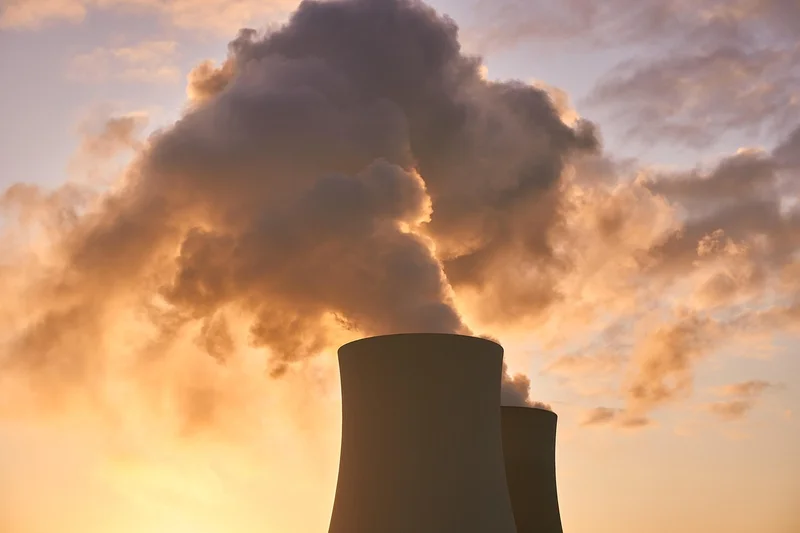
This physical bottleneck has forced the smart money to pivot aggressively. Tier-1 asset managers, sovereign wealth funds, and private equity giants are executing the largest capital reallocation since the industrial revolution, shifting balance sheets away from pure-play digital assets and toward tangible, hard-asset infrastructure.
Consider the traditional venture and growth equity playbook: pour billions into pre-revenue software startups with high burn rates. Today, that capital is flowing into electrical engineering, heavy machinery, and power generation assets. Infrastructure funds that historically targeted toll roads, airports, and traditional pipelines are now bidding aggressively on electrical grid assets, renewable energy portfolios, and independent power producers (IPPs). Smart allocators are increasingly looking at Green energy investing as the bedrock of future technological security.
This is not merely a tactical trade; it is a strategic hedge against macro uncertainty. In a shifting interest rate environment marked by sticky inflation, long-duration infrastructure assets linked to inflation-protected, multi-decade contracts offer a defensive fortress. Hyperscalers—Microsoft, Google, Amazon, and Meta—are no longer just tech companies; they are functioning as quasi-energy utilities, signing direct power purchase agreements (PPAs) that span decades and run into the billions of dollars, fundamentally altering corporate Cloud computing CapEx strategies.
The risk profile has fundamentally shifted. Software obsolescence happens in months; a well-maintained power plant or a secured grid connection has a productive lifespan measured in decades. By moving down the risk curve into hard infrastructure, institutional capital is building a moat that pure-play software companies simply cannot replicate.
3. Beyond the Wall Socket: Grid Infrastructure, Nuclear Power, and AI Baseload Energy
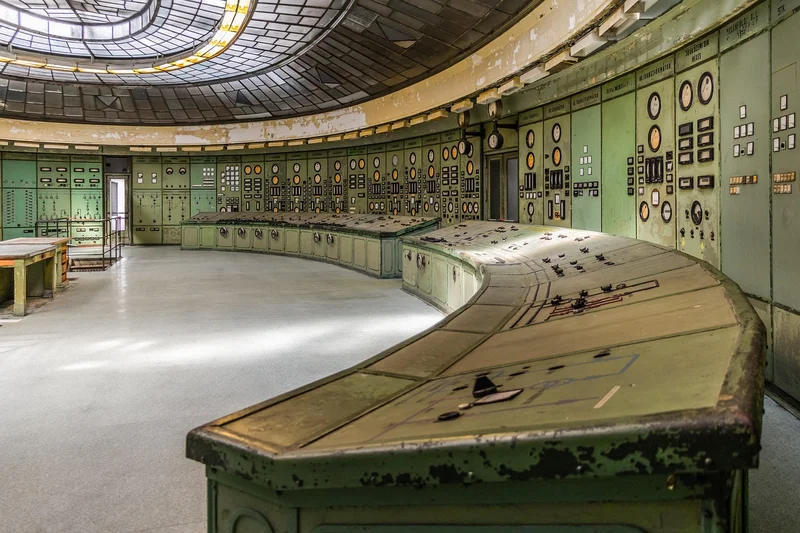
As data center campuses scale from 10 megawatts to gigawatt-scale “hyperscale cities,” the Achilles’ heel of the AI boom becomes painfully obvious: grid intermittency and AI data center energy consumption.
You cannot train a frontier AI model on wind and solar alone. While renewable energy is a critical component of corporate net-zero commitments, AI models require 24/7/365 baseload power. A millisecond drop in power during a multi-week training run can corrupt millions of dollars worth of compute progress.
This necessity has sparked an unprecedented romance between Big Tech and the nuclear energy sector. Tech giants are no longer waiting for the public grid to modernize; they are bypassing municipal bottlenecks entirely. We are witnessing Silicon Valley strike direct deals with nuclear operators, such as Microsoft’s historic agreement with Constellation Energy to help restart the mothballed reactor at Three Mile Island, alongside massive venture investments in Small Modular Reactors (SMRs).
Advanced natural gas turbines, localized microgrids, and grid-scale battery storage are also seeing a massive renaissance. The race to secure reliable, non-intermittent power has turned energy development into a high-stakes geopolitical and economic chess match.
The physical infrastructure underpinning this boom, however, is severely strained. Outdated municipal grid capacities and multi-year interconnection queues are the primary friction points in the global AI race. Transformers have multi-year lead times; high-voltage transmission lines face regulatory and environmental gridlock. Consequently, capital is flowing not just to the power generation source, but to the entire electrical supply chain—copper producers, heavy electrical equipment manufacturers, and grid-modernization specialists. Whoever controls the wires, the transformers, and the baseload generation controls the pace of global innovation, mitigating the dangerous economic exposure of a struggling grid infrastructure AI bottleneck.
4. Re-Pricing the Future: Commodifying Energy in the Age of Intelligence

The convergence of artificial intelligence and energy infrastructure is fundamentally altering global commodity curves. For decades, electricity demand was relatively flat, growing in lockstep with modest population increases and general economic expansion. That flat line has turned into a vertical hockey stick.
This dynamic is re-pricing energy in real time. We are entering an era where electricity is effectively being commodified as the primary computational currency. When an AI data center can generate vastly higher revenue per megawatt-hour than traditional heavy industry, the bidding dynamics for power change completely. Data center operators can afford to pay a premium for guaranteed baseload capacity, driving up power prices in key regional transmission organizations (RTOs) and forcing industrial manufacturers to compete with tech giants for electrons.
Navigating this landscape requires a sophisticated approach to capital expenditures (CapEx). As hyperscalers and institutional investors deploy hundreds of billions of dollars into these long-cycle projects, they must do so against a backdrop of terminal-rate uncertainty and massive execution risk. Building a nuclear-powered data center campus is not like spinning up a cloud region in AWS; it requires navigating nuclear regulatory frameworks, local community pushback, and complex supply chain logistics that span a decade.
Yet, the core investment thesis remains unshakeable: Securing baseload capacity is the only true gatekeeper to the digital economy’s future.
We have moved past the era where algorithms could scale infinitely on the back of cheap, invisible electricity. The future belongs to those who control the megawatts. For institutional investors, family offices, and allocators looking past the hype cycle of generative AI, the real alpha is no longer found in the application layer—it is buried deep in the physical infrastructure of the grid, the nuclear reactors of the rust belt, and the high-voltage wires powering the next evolution of human intelligence.