The Trillion-Dollar AI CapEx Boom: Winners & Losers


Executive Summary & Key Takeaways
- The CapEx Supercycle: The race to build foundational AI architecture is triggering a massive structural reallocation of global liquidity, draining capital from traditional sectors to fund physical infrastructure.
- Silicon vs. Steel Divergence: Institutional investors face stark sectoral bifurcation, marked by high-beta tech momentum alongside capital-rationed traditional industries.
- FCF Compression: Aggressive outlays for GPUs, liquid-cooling, and real estate are squeezing Free Cash Flow (FCF) yields, raising questions about the sustainability of current hardware spending.
- Energy Bottlenecks & Nuclear Baseload: Unprecedented power demands are making AI data center energy demand a top-tier macroeconomic trade, shifting focus toward nuclear, clean energy, and grid modernization.
- Credit & Obsolescence Risks: Rapidly accelerating hardware lifecycles and heavy reliance on private credit markets introduce systemic depreciation and debt volatility risks.
We are living through one of the most aggressive capital expenditure cycles in modern financial history. The race to build out the foundational layers of Artificial Intelligence—spanning advanced silicon, hyperscale data centers, resilient power grids, and high-bandwidth optical networking—is fundamentally reshaping global capital markets.
This is not merely a cyclical tech upgrade. It is a structural reallocation of global liquidity. For institutional investors, corporate treasurers, and portfolio managers, understanding the mechanics, risks, and strategic implications of this AI Infrastructure CapEx Boom is no longer optional; it is the definitive challenge of the current market regime.
1. The Multi-Hundred-Billion-Dollar CapEx Supercycle and Global Liquidity Shifts

The sheer scale of capital deployment required to train and run frontier Large Language Models (LLMs) has created a gravitational pull that is altering global liquidity flows. As the world’s largest technology conglomerates—hyperscalers like Microsoft, Alphabet, and Meta—alongside sovereign wealth entities and venture-backed startups commit hundreds of billions of dollars to infrastructure, capital is being systematically drained from traditional segments of the global economy.
This dynamic is redefining the cost of capital. When corporate balance sheets and debt markets prioritize silicon over steel, or data center real estate over commercial retail, it creates a zero-sum liquidity environment. Central bank policies and macroeconomic conditions dictate the background rate, but the AI CapEx supercycle acts as a localized vacuum, pulling institutional pools of capital directly into the tech ecosystem.
Sectoral Divergence and Semiconductor Supply Chain Investing
This liquidity shift has triggered a profound sectoral divergence. On one side, we see the parabolic ascent of the AI infrastructure proxy class. On the other, traditional sectors—such as consumer discretionary, legacy industrials, and commercial real estate—are experiencing a relative starvation of capital.
Investors are increasingly unwilling to fund capital-intensive, slow-growth traditional businesses when the secular growth narrative of generative AI offers explosive top-line potential. Consequently, valuation multiples are expanding in specialized tech niches while compressing in sectors vulnerable to consumer fatigue and higher borrowing costs. For portfolio managers, this creates a market environment defined by stark bifurcation: a high-beta, high-stakes technology complex sitting alongside a defensive, capital-rationed traditional economy.
The New Pillars of Global Compute
To understand where this money is going, one must look beyond software and algorithms. The true bottleneck—and therefore the primary recipient of this capital—lies in physical infrastructure. The “New Pillars” of the global economy are now defined by three critical nodes:
- Semiconductor Foundries and Advanced Packaging: The extreme precision required to manufacture sub-nanometer chips has concentrated capital into a handful of specialized foundries and equipment manufacturers utilizing advanced silicon architectures.
- Power Generation and Electrical Grids: Data centers consume vast, continuous amounts of electricity. The AI boom has catalyzed unprecedented investments in clean energy, nuclear baseload power, and localized grid modernization.
- Advanced Networking Hardware: Moving petabytes of data across distributed clusters requires cutting-edge optical transceivers, high-speed Ethernet, and InfiniBand switching fabrics, driving record demand for specialized networking equipment.
2. Market Implications: Tech Momentum vs. Free Cash Flow Compression in AI
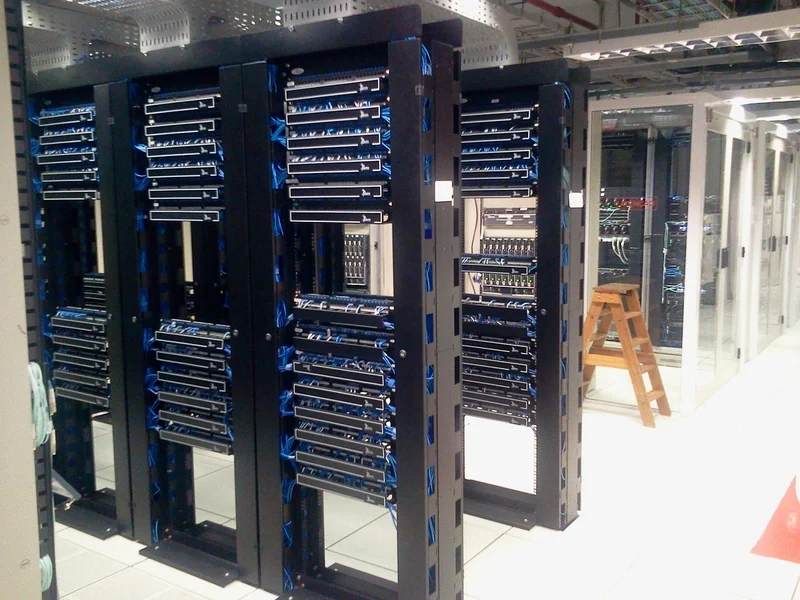
In the near term, the beneficiaries of this capital deluge are reaping the rewards of cyclical tech momentum. Equipment manufacturers, semiconductor designers, and select hyperscalers have posted historic earnings beats, driven by pricing power that defies traditional economic cycles. Demand for specialized accelerators outstrips supply, allowing industry leaders to command luxury margins.
For momentum-driven macro funds and tactical growth investors, this has created a powerful feedback loop: robust earnings reinforce bullish sentiment, which in turn justifies further capital deployment and attracts passive inflows.
The Cash Flow Squeeze and FCF Risks in AI
However, beneath the headline-grabbing revenue figures lies a brewing tension: the relentless compression of Free Cash Flow (FCF) yields. Building multi-billion-dollar clusters of GPUs, acquiring land, securing liquid-cooling systems, and building dedicated power plants requires immense upfront cash outlays.
As CapEx-to-revenue ratios climb for the primary architects of the AI buildout, FCF yields are inevitably squeezed. Wall Street is currently willing to look past this compression due to the promise of secular dominance. Yet, financial gravity dictates that capital cannot be indefinitely deployed at diminishing marginal returns without a reckoning. Markets will eventually demand to see whether these cash outflows are translating into durable, high-return economic assets.
The Monetization Clock
This brings us to the most critical variable in the current financial equation: the monetization clock. The race to build AI infrastructure is operating on an accelerated timeline, but enterprise AI adoption is bound by the realities of change management, workflow integration, security compliance, and return-on-investment (ROI) validation.
If enterprise customers fail to monetize AI applications rapidly enough to justify the subscription and API costs passed down by the hyperscalers, a valuation contraction will follow. The fundamental question facing the market is simple: Will enterprise software revenues scale fast enough to support the depreciating asset base of the hardware layer before those assets become technologically obsolete?
3. Systemic Risks: Corporate Debt, Private Credit, and Asset Depreciation

While cash-rich tech giants are funding a significant portion of this boom through operating cash flow, a growing share of the broader ecosystem is turning to debt markets. Mid-tier cloud providers, specialized infrastructure startups, and energy developers are tapping corporate bond markets and private credit vehicles to finance their respective buildouts.
This reliance on corporate borrowing introduces structural fragility. If projected utilization rates for AI data centers fall short of expectations, or if pricing power for compute erodes due to hyper-competition, these debt-laden entities will find themselves over-leveraged against underperforming assets.
Asset Depreciation Dangers and Technological Obsolescence
One of the most underappreciated risks in the current landscape is the rate of technological obsolescence. Unlike traditional industrial assets—such as commercial aircraft, real estate, or manufacturing plants—which have predictable, multi-decade lifecycles, AI hardware operates in a hyper-evolutionary environment.
Generational leaps in semiconductor architecture mean that hardware purchased today could be rendered economically obsolete in three to five years. If corporations are depreciating these massive capital outlays over traditional timelines while the underlying utility declines rapidly, balance sheets will be exposed to sudden, severe impairments.
Spillover Effects on Financial Stability
The systemic risk extends far beyond the technology sector. As private credit funds and commercial banks increasingly finance data center development and energy infrastructure, any friction in enterprise AI monetization could trigger broader credit market volatility.
Should a wave of mid-tier infrastructure providers face liquidity crunches or debt restructuring, the shockwaves would ripple through the financial system, impacting collateralized loan obligations (CLOs), regional bank balance sheets, and broader corporate credit spreads.
4. Institutional Playbook: Strategic Overweights, Energy Plays, and Tactical Hedges
Navigating the AI Infrastructure CapEx Boom requires a disciplined, multi-layered institutional playbook. For sovereign wealth funds, macro hedge funds, and Chief Investment Officers (CIOs), the objective is to capture the structural upside of the hardware and energy bottlenecks without falling victim to cyclical froth.
- Upstream Dominance: Overweight companies positioned at the absolute apex of the supply chain—those controlling advanced semiconductor lithography, specialized IP, and high-margin component manufacturing—possess superior pricing power and insulation from downstream software volatility.
- The Energy Play: The intersection of AI and power generation represents one of the most compelling long-term macro trades. Allocating capital to modern utilities, nuclear energy developers, and grid-infrastructure firms provides a defensive growth profile backed by insatiable compute demand.
Portfolio Defense and Risk Management
Given the underlying risks of FCF compression, asset depreciation, and potential credit contagion, proactive portfolio defense is essential for institutional mandates.
- Credit Spreads and Short Exposure: CIOs should evaluate tactical hedges using credit default swap (CDS) indices or short positions in over-leveraged, secondary-tier infrastructure providers and debt-heavy cloud hosts that are most vulnerable to margin compression.
- Quality Factor Screening: Shift equity exposure toward cash-generative industry leaders with fortress balance sheets, minimizing exposure to unprofitable, high-beta AI plays that rely entirely on perpetual external financing.
Long-Term Asset Allocation in the New Market Regime
Ultimately, the AI Infrastructure CapEx Boom is a transformative macroeconomic event. It represents the rewiring of the global digital economy. Successful long-term asset allocation requires a delicate balance: participating aggressively in the secular productivity gains of the hardware and energy buildout while maintaining rigorous risk management protocols to insulate portfolios from impending credit and valuation volatility.
By distinguishing between sustainable foundational utility and speculative excess, institutional investors can successfully navigate the Great Liquidity Reallocation and position themselves at the vanguard of the next economic era.