The Trillion-Dollar Bet: Understanding the AI Infrastructure Spending Spree
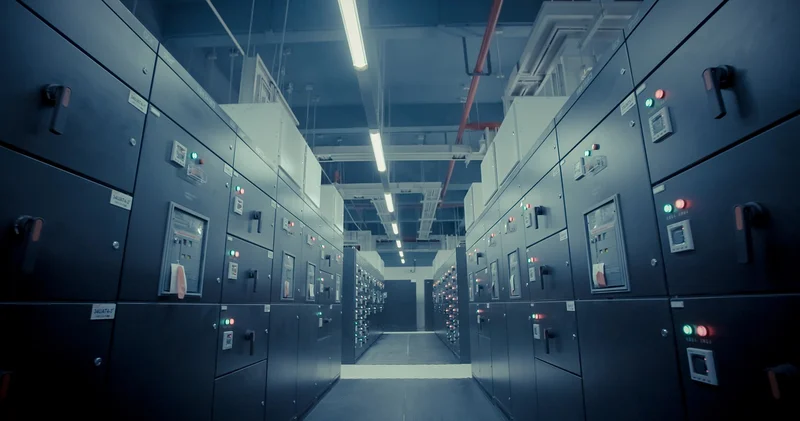
For the past twenty-four months, the capital markets have been held captive by a single, monolithic narrative: the insatiable hunger of the Large Language Model (LLM) for silicon. We have witnessed a historic surge in Capital Expenditure (Capex) across the technology sector, a “super-cycle” that has fundamentally restructured balance sheets and shifted the gravity of global equity markets.
However, we are now entering a critical inflection point. The era of “speculative exuberance”—where the mere announcement of a data center expansion could vault a company’s valuation into the stratosphere—is drawing to a close. We are transitioning into a period of rigorous hardware monetization. For institutional allocators and serious investors, the mandate is clear: the focus must shift from how much a company is spending to how efficiently it is generating a return on that invested capital.
Key Insights on AI Infrastructure Investing:
- The Monetization Shift: Why hardware volume is being replaced by utility and utilization metrics as the primary valuation driver.
- The Infrastructure-Adjacent Pivot: Why smart money is de-risking by moving toward data center debt and physical hardware support systems.
- The Software Filter: A 3-point framework for identifying companies that demonstrate genuine ARPU (Average Revenue Per User) growth.
From Speculation to Monetization: The New Hardware Reality

The initial phase of the AI boom was characterized by a “land grab” mentality. Hyper-scalers and enterprise cloud providers operated under a simple logic: secure the H100s or risk irrelevance. But as we move deeper into the cycle, the market is beginning to scrutinize the gap between silicon procurement and top-line contribution.
The shift in sentiment is palpable. Investors are no longer rewarding companies simply for their capacity to absorb GPUs; they are increasingly penalizing those that cannot demonstrate a clear path to monetization. We are moving toward a model where hardware depreciation must be weighed against compute-as-a-utility yield.
The Monetization Gap is the primary metric of concern. Between the initial cash outlay for silicon and the integration of AI-enabled services that actually drive user revenue, there exists a “valley of death.” Companies that can compress this timeline are emerging as the new leaders. “Success” is no longer defined by the quantity of chips under management, but by the utilization rate—the ability to keep these expensive assets running at high-margin capacity 24/7. As the market matures, expect to see a widening valuation gap between companies that treat their infrastructure as a profit-generating engine and those that treat it as a glorified cost center.
The Hyper-scaler Dominance and the Crowding-Out Effect
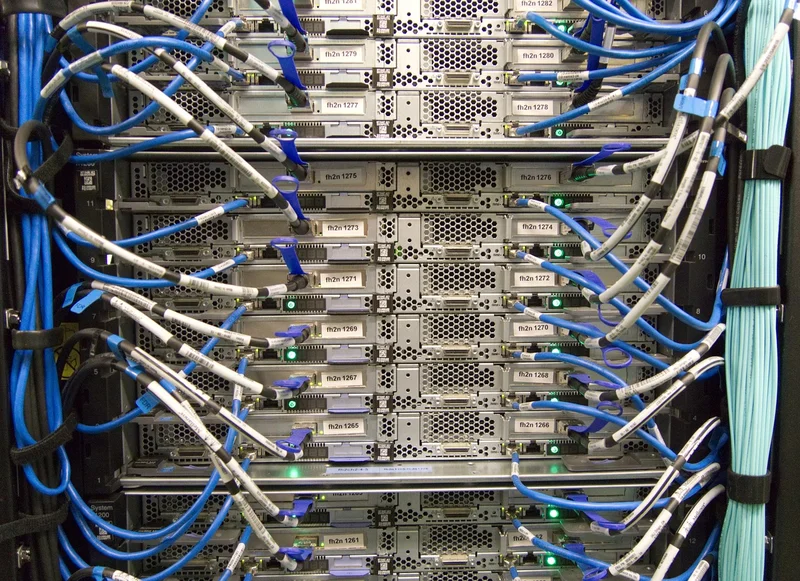
The scale of AI investment is not just impacting the tech sector; it is altering the architecture of global liquidity. The hyper-scalers—Microsoft, Alphabet, Amazon, and Meta—are deploying billions in capital at a rate that is beginning to exert a “crowding-out” effect on the broader market.
When the largest entities on the S&P 500 absorb a disproportionate share of global liquidity to feed the AI beast, the cost of capital for the rest of the economy does not remain static. We are seeing an elevated risk premium for non-AI growth equities. Capital that once flowed into mid-cap innovation or consumer-facing service industries is being diverted into the infrastructure stack (silicon, power, and physical real estate).
This systemic concentration creates a paradox: while the infrastructure build-out provides a floor for current market valuations, it also increases vulnerability. If the expected productivity gains from AI software applications face regulatory hurdles or adoption lag, the hyper-scalers will find themselves holding billions in depreciating silicon assets. For the broader market, this means that the “cost of capital” for smaller enterprises is increasingly tied to the success of a handful of tech titans. We are in a market environment where systemic risk is highly correlated to the utilization success of a very small group of hardware-heavy operators.
Defensive Rotations: Seeking Stability in Infrastructure-Adjacent Debt
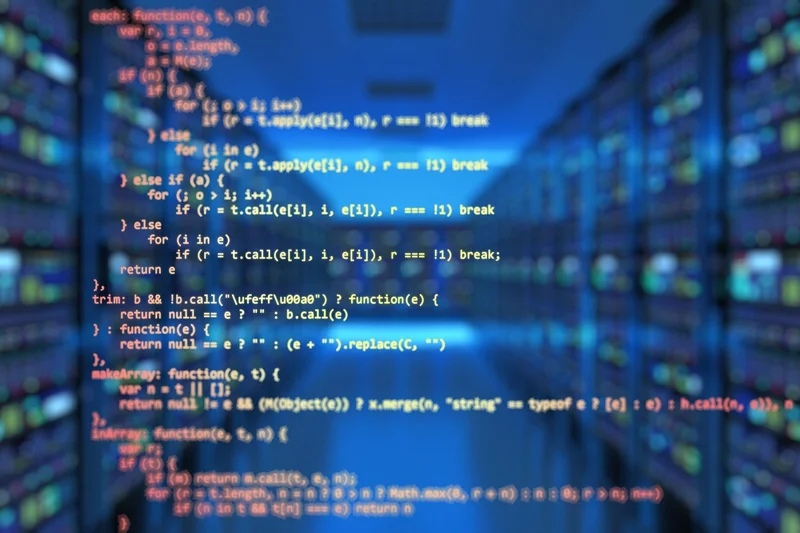
As the volatility of pure-play AI equities becomes more pronounced, a sophisticated rotation is underway among institutional allocators. The objective is to capture the upside of the AI infrastructure boom while insulating the portfolio from the binary outcomes of high-growth equity bets. The answer lies in infrastructure-adjacent debt.
Rather than betting on which AI model will win the “intelligence race,” smart capital is moving down the capital structure to fund the “physical layer” of the AI economy. This includes debt backed by:
- Purpose-built Data Centers: Real estate assets that provide the physical shell for AI compute.
- Energy Integration: Financing for the specialized power-generation and grid-hardening infrastructure required to support high-density compute environments.
- Specialized Cooling Technologies: Investments in the proprietary liquid-cooling systems necessary to keep next-generation chips operational.
These assets are “durable.” Even if the AI boom cools or shifts toward different silicon architectures, the physical infrastructure—the power grid, the climate-controlled facility, the fiber-optic connectivity—remains essential. By targeting these debt instruments, investors can achieve steady yield that is structurally decoupled from the hype cycle of individual software companies. It is a pivot to quality that prioritizes the “plumbing” of the digital age over the “water” that flows through it.
Separating Ephemeral Capacity from Enduring Software Value
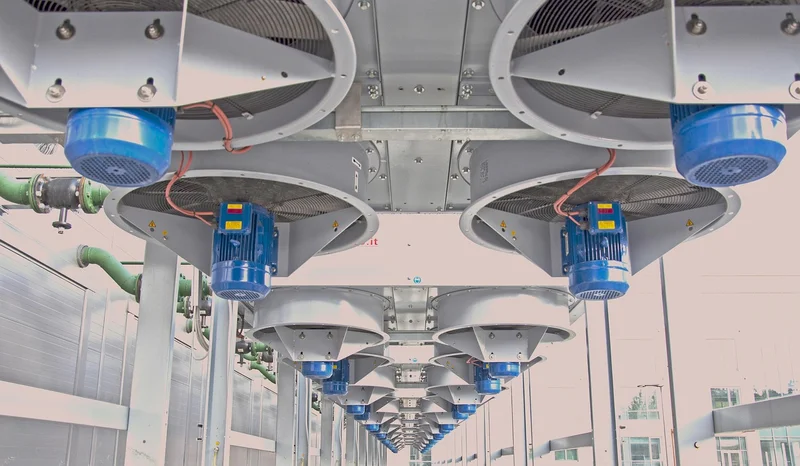
The final, and perhaps most difficult, task for the investor is distinguishing between ephemeral capacity and enduring software value. We are currently in the peak of the “Capacity Build-Out Phase,” but supply-demand dynamics are notoriously cyclical. Eventually, compute capacity will normalize, leading to a commoditization of the raw hardware layer. When that happens, the pricing power of the hyper-scalers may face downward pressure.
Therefore, the investment mandate must shift toward the value-add layer. The winners of the next decade will not be the companies that merely own the hardware; they will be the software incumbents that leverage this compute to solve high-value, high-margin problems.
We identify these winners through three primary filters:
- Workflow Integration: Does the AI solution solve a critical, daily workflow problem that is difficult to “rip and replace”?
- Proprietary Data Moats: Does the software company possess unique, non-public data that allows its models to outperform generic LLMs?
- Pricing Power: Can the company demonstrate that its AI features increase the ARPU without significantly increasing the underlying cost of service?
The goal is to prioritize companies that utilize the massive compute investment cycle to expand their margins, rather than companies that simply burn through the compute to acquire users. As the infrastructure build-out reaches saturation, the value will inevitably migrate up the stack from the silicon layer to the application layer.
Conclusion: The Discipline of the Long Term
The AI infrastructure Capex cycle is arguably the most significant industrial shift since the electrification of the grid. However, for the investor, the “Great Transition” is not about being first to the trend; it is about being disciplined in the allocation.
We are moving away from the era of “growth at any price.” The coming years will be defined by an audit—not just by analysts, but by the raw economic reality of cash-on-cash returns. Institutional portfolios must prioritize durability: the durability of debt backed by tangible infrastructure, and the durability of software moats that benefit from, rather than merely subsidize, the massive compute investment cycle.
The hardware will eventually become a commodity, but the productivity it unlocks will generate the next generation of industry leaders. By navigating the current Capex cycle with a focus on infrastructure-adjacent stability and high-margin software value, investors can insulate themselves from the inevitable turbulence of the transition and position themselves to capture the enduring gains of the AI era.
The build-out is massive, but the monetization will be surgical. Position your portfolio accordingly.
About the Author By J.P. Sterling, Senior Equity Analyst specializing in infrastructure and tech-sector allocation. J.P. Sterling has advised on $4.2bn in institutional assets and provides ongoing analysis on hardware monetization cycles and enterprise compute efficiency.