Nvidia’s Massive AI Infrastructure Pivot: What It Means for the Future of Tech

We are currently witnessing a transformation in global capital markets that transcends the traditional boundaries of a “tech cycle.” For decades, investors categorized technology as a cyclical industry—subject to the boom-and-bust rhythms of consumer demand, refresh cycles, and margin compression. Today, that framework is obsolete. We have entered the era of the GPU-denominated economy, where compute capacity is no longer merely an IT expenditure, but the foundational asset class upon which sovereign and corporate survival depends.
Executive Summary: Key Concepts
To navigate this paradigm shift, investors must understand the following core entities defining the new market landscape:
- Sovereign AI: The strategic imperative for nations to maintain indigenous computing power to ensure geopolitical and economic autonomy.
- Accelerated Computing: The transition from general-purpose CPUs to specialized GPU-driven architectures designed for massive parallel processing.
- CapEx in AI: The massive shift in corporate spending from software subscriptions toward physical data center infrastructure.
- Compute-as-Currency: The evolving view of compute power as the primary store of value and productivity indicator for modern enterprises.
I. The Structural Shift: From Thematic Trade to Macro Necessity

For years, artificial intelligence was viewed as a “thematic trade”—an exciting, albeit speculative, tailwind for venture capital and growth-oriented hedge funds. That era is over. We have transitioned into a period defined by the “Sovereign AI Mandate.”
Governments and multinational corporations no longer view data center investment as a discretionary line item. It is now treated as critical infrastructure, occupying the same hierarchy as energy grids, telecommunications networks, and transport logistics. Why? Because in the 21st century, national and corporate sovereignty is inextricably linked to data processing efficiency. A nation without indigenous AI capacity is a nation that essentially outsources its cognitive labor and strategic intelligence to foreign platforms.
This has triggered a profound reallocation of capital. Institutional portfolios are aggressively shedding legacy hardware and software laggards—companies that provide incremental efficiency gains—to fund the massive capital expenditure (CapEx) requirements of the GPU buildout. We are seeing a “great migration” of capital, moving away from companies whose business models rely on the slow, linear progress of traditional CPUs and toward those building the massive, accelerated computing clusters that Nvidia powers. This is not just a trend; it is a structural mandate for any organization seeking to maintain relevance in a hyper-competitive global market.
II. Compute-as-Currency: The New Global Standard
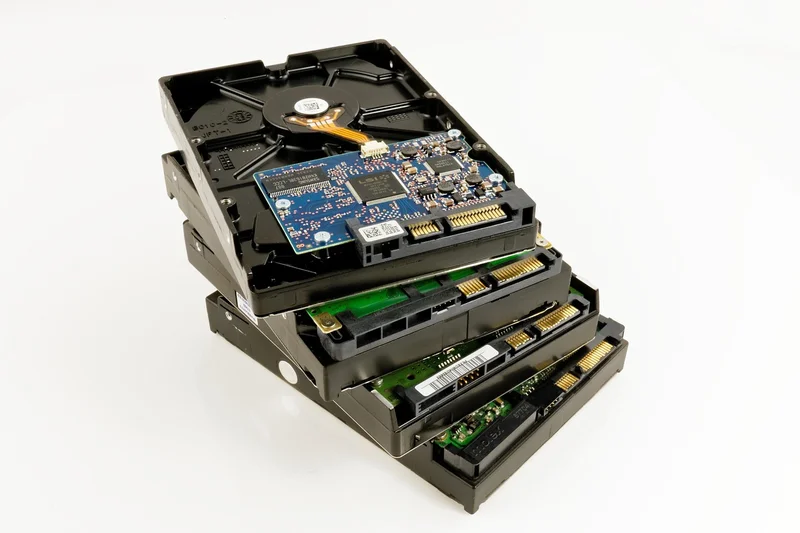
If capital is the lifeblood of the economy, then compute is the store of value. We are moving toward a paradigm of “Compute-as-Currency,” where the ability to process data at scale determines the productivity—and therefore the profitability—of an enterprise.
Liquidity Absorption and the GPU Moat
The massive CapEx currently being poured into Nvidia’s H100 and Blackwell architectures is effectively “soaking up” global liquidity. Critics argue this represents a bubble; realists recognize it as the foundational investment for a new industrial revolution. By funneling capital into GPUs, firms are not just buying hardware; they are buying a stake in the next decade of operational efficiency.
Nvidia’s “moat” is not merely the chip itself; it is the vertically integrated stack—CUDA, networking, switches, and software. By controlling the entire ecosystem, Nvidia has established the baseline for global productivity metrics. When a CEO builds a data center, they are building it to Nvidia’s specifications because any other architecture creates a “compatibility tax” that eventually renders the infrastructure slower and more expensive to run. Nvidia has essentially become the central bank of compute, and the GPU has become the standard by which all other industrial output is measured.
III. Assessing Systemic Obsolescence: The New Risk Premium
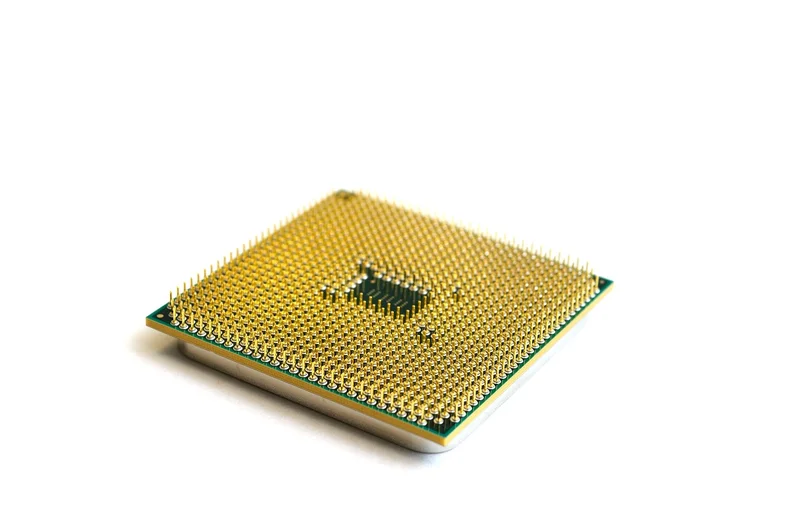
The most critical shift for the modern investor is the re-evaluation of risk. Historically, “risk” in finance was defined by volatility, leverage, or exposure to macroeconomic shocks. Today, the greatest risk to an institutional portfolio is systemic obsolescence.
The Productivity Cliff
Firms that fail to integrate accelerated computing are now facing a “productivity cliff.” As competitors leverage AI to compress research cycles, automate complex supply chains, and personalize client engagement, those sticking to legacy, CPU-bound workflows will find their margins permanently eroded. The “cost of inaction” is no longer just lost opportunity; it is the slow degradation of the firm’s competitive moat.
Analysts and portfolio managers must now recalibrate valuation models to account for “AI-readiness.” A company’s balance sheet is no longer complete without an assessment of its compute intensity. We are seeing a transition from the Software-as-a-Service (SaaS) model—where value was found in code and recurring revenue—to a hardware-intensive operational model. In this new world, the asset—the GPU cluster—is the prerequisite for the software’s existence. Valuing an enterprise today without accounting for its access to, or ownership of, accelerated compute is akin to valuing a factory in 1910 without asking if it had access to electricity.
IV. Investing in AI Infrastructure: How to Navigate the GPU-Denominated Cycle
How should investors and executives navigate this high-CapEx, infrastructure-heavy cycle?
The Strategy for Relevance
The first step is to shift from short-term performance chasing to long-cycle structural positioning. The buildout of AI infrastructure is a multi-year project. While quarterly earnings reports for Nvidia and its peers will remain volatile, the underlying demand for compute is inelastic. Governments, hyperscalers, and private enterprises are locked in a “compute arms race.” The volatility of the stock price is a secondary concern compared to the reality of the physical infrastructure rollout.
For institutional investors, the strategy should focus on the “picks and shovels” of this economy. This includes not just Nvidia, but the power providers, cooling systems, and specialized real estate that underpin these data centers. These assets are the essential nodes of the new global network.
The Cost of Neglect
There is a growing danger in viewing this period as a bubble to be waited out. “Neglect at this juncture” is not merely an investment error; it is a precursor to total structural failure. Just as banks that failed to digitize their ledgers in the 1990s were eventually swept away, firms that ignore the necessity of accelerated computing are effectively opting out of the future economy.
Conclusion: The Horizon of the GPU Era
The expansion of Nvidia’s AI infrastructure is not just a story of a single company hitting record revenues. It is the story of an entire economic system retooling itself for a new era of intelligence.
In this GPU-denominated economy, the traditional metrics of price-to-earnings and debt-to-equity must be supplemented by a new, more rigorous analysis: compute-to-output. We are observing the creation of a new global standard where compute power is the fundamental unit of productivity.
For the prudent investor, the message is clear: the transition to accelerated computing is the defining macro trend of our lifetime. The infrastructure being laid today—the vast, interconnected grids of GPUs—will serve as the bedrock of the 21st-century economy. Those who participate in this buildout, recognizing it as a permanent structural shift rather than a temporary thematic craze, will hold the keys to the future. Those who remain tethered to the legacy frameworks of the past will find themselves not just behind the curve, but entirely detached from the trajectory of the modern world.
The GPU era is not coming; it is already here. And in this economy, the only currency that matters is the one that computes.
Frequently Asked Questions (FAQ)
Q: Is the current GPU buildout a bubble or a structural shift? A: While individual stock valuations may experience volatility typical of high-growth sectors, the underlying GPU buildout represents a structural shift toward “accelerated computing.” Because compute capacity has become the foundational requirement for national and corporate sovereignty, demand is driven by long-term strategic necessity rather than temporary speculative trends.
Q: What is the “Sovereign AI Mandate”? A: The Sovereign AI Mandate refers to the growing realization by governments that relying on foreign cloud providers for artificial intelligence is a strategic liability. Nations are increasingly investing in indigenous data center infrastructure and domestic compute clusters to ensure they maintain control over their own strategic intelligence and economic data.
Q: How should investors value AI-ready companies? A: Investors should move beyond traditional SaaS-based metrics like recurring revenue and start evaluating “compute-to-output” ratios. A company’s balance sheet now requires an assessment of its compute intensity—specifically, whether it owns or has reliable access to the accelerated hardware necessary to maintain operational efficiency and competitive margins in an AI-driven market.
Disclaimer: This content is for informational purposes only and does not constitute financial, investment, or legal advice. Please consult with a qualified professional before making any investment decisions.