The AI Energy Crunch: Why Data Centers Are Starving for Power

For the past decade, Wall Street has priced software as an infinite-growth asset. The prevailing thesis was simple: pure-play digital enterprises enjoy zero marginal costs of distribution, hyper-scalable cloud economics, and featherlight physical footprints. Capital flooded into SaaS (Software-as-a-Service) business models, ignoring balance-sheet capital intensity in favor of asset-light compounding.
Today, that thesis is colliding with the laws of thermodynamics.
The generative AI revolution—spearheaded by Large Language Models (LLMs) scaling exponentially in parameter count and compute requirements—has transformed the technology sector from a consumer of virtual bits into the largest industrial consumer of raw electrons in modern history. We are no longer merely scaling software; we are attempting to bolt a multi-terawatt industrial revolution onto a 20th-century electrical grid that was built for incremental, linear growth.
For macro strategists, asset allocators, and institutional investors, the AI data center energy crisis is the defining thematic shift of the decade. It marks the end of the hyper-digital illusion and the dawn of a brutal, hard-asset reality: Computation is energy, and energy is the ultimate economic currency.
1. The Bottleneck: When Exponential Compute Hits Physical Limits

To understand the scale of the crisis, one must first comprehend the divergence between digital scaling laws and physical infrastructure delivery times.
Since the introduction of transformer architectures, the compute power required to train frontier AI models has been doubling roughly every six months—vastly outpacing historical Moore’s Law trajectories. Training clusters containing tens of thousands of specialized accelerators (GPUs) now draw power loads rivaling small cities. A single next-generation AI data center cluster routinely demands between 500 megawatts (MW) and 1 gigawatt (GW) of continuous, uninterrupted power. To put that in perspective, 1 gigawatt is roughly equivalent to the baseline electricity consumption of 800,000 American homes.
The core systemic friction lies in a structural mismatch of timelines:
- The AI Timeline: Hyperscalers (Microsoft, Google, Amazon, Meta) operate on a hyper-compressed 12-to-18-month product iteration cycle. They can design, finance, and deploy billion-dollar clusters of GPUs in months.
- The Utility Timeline: Traditional electrical transmission, substation construction, and high-voltage grid interconnection queues operate on a 5-to-10-year horizon. Regulated utilities plan generation capacity based on decades of historical demand growth curves—curves that never anticipated a sudden, vertical surge in industrial electricity demand.
Consequently, power constraints have replaced silicon availability as the primary ceiling for AI deployment. Hyperscalers are sitting on mountains of cash and billions of dollars in advanced semiconductor orders, yet they are finding themselves legally and physically unable to turn them on.
Across major grid operators—most notably PJM Interconnection, which manages the wholesale electricity market and grid reliability for all or parts of 13 US states—interconnection queues are choked with gigawatts of pending data center load. Utilities are issuing warnings that regional grids face imminent reliability deficits. The digital economy has officially outgrown the physical grid.
2. Beyond the Meter: Datacenter Developers as Energy Industrialists
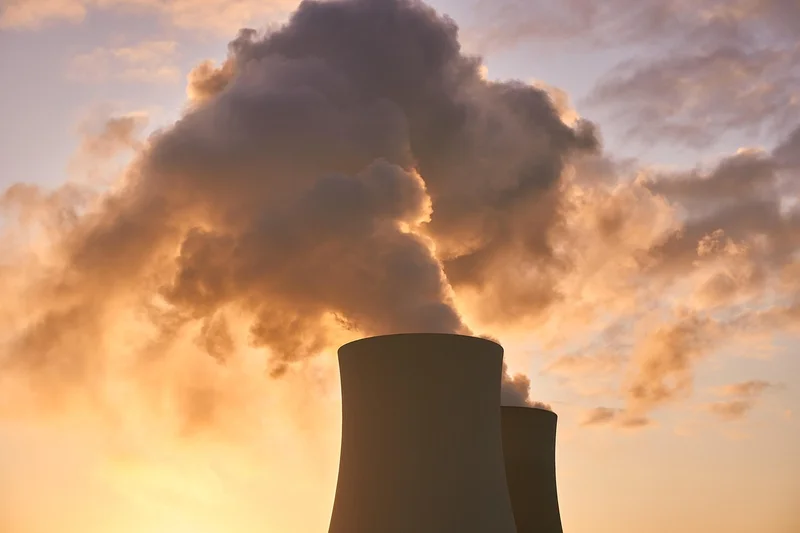
Because the public grid can no longer keep pace, the relationship between big tech and energy markets is undergoing a profound mutation. Hyperscalers are no longer acting as passive consumers plugging into a municipal wall socket; they are rapidly evolving into aggressive, vertically integrated energy industrialists.
We are witnessing an unprecedented convergence between Silicon Valley and the heavy power sector. Tech giants are bypassing traditional utility procurement processes altogether, deploying direct balance-sheet power to guarantee baseload electricity for their server farms. For a deeper look into how this trend intersects with portfolio positioning, explore our detailed analysis on energy investing.
The Nuclear Renaissance
The most striking manifestation of this shift is the wholesale resurrection of nuclear energy. Because intermittent renewables like wind and solar cannot provide the 24/7/365 baseload reliability required to train frontier AI models without massive, unproven battery storage arrays, tech firms are turning to nuclear power. Savvy institutional investors are closely monitoring nuclear energy stocks as these long-term utility deals materialize.
- Three Mile Island (Crane Clean Energy Center): Microsoft’s landmark power purchase agreement with Constellation Energy to restart the shuttered Unit 1 at Three Mile Island represents a watershed moment. For decades, nuclear retirement was seen as an irreversible economic and political inevitability. Suddenly, clean, carbon-free baseload power is so valuable that defunct reactors are being brought back online solely to fuel AI compute.
- Constellation and Next-Gen Nuclear: Similar corporate-utility integrations are underway across the PJM footprint, with data center developers aggressively courting nuclear operators to co-locate facilities directly adjacent to generation plants, avoiding transmission congestion fees altogether.
Microgrids and Direct-Connect Solutions
Beyond nuclear, hyperscalers are racing to secure behind-the-meter generation solutions:
- Natural Gas Peakers & Combined Cycle Plants: Despite corporate net-zero commitments, the sheer urgency of the AI arms race has forced a pragmatic pivot. Tech companies are actively partnering with independent power producers (IPPs) to secure dedicated natural gas supply, ensuring uninterrupted uptime.
- Geothermal and Advanced Fission: Venture capital is flooding into next-generation geothermal startups (e.g., Fervo Energy) and small modular reactor (SMR) developers. These are not philanthropic ESG investments; they are desperate strategic hedges designed to secure proprietary power before competitors lock up regional supplies.
3. The Macro Liquidity Shift: Reallocating Capital from Software to Steel
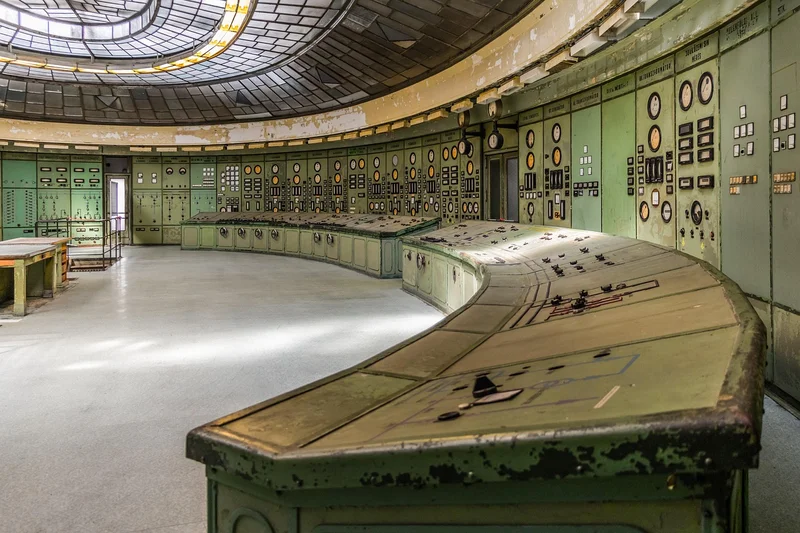
For institutional investors, this structural bottleneck triggers a massive reallocation of capital across global markets. For the past fifteen years, portfolio construction favored an asset-light posture: overweight software, overweight platform aggregators, underweight industrials, and underweight commodities.
The AI energy crisis forces a violent rotation: Capital is shifting from software to steel.
[Institutional Capital]
       │
       ├─► (Historically) ──► SaaS, Cloud Pure-Plays, Digital Assets
       │
       └─► (The Current Shift) ──► Power Generation, Grid Infrastructure, Electrical Hardware
The Hard-Asset Influx
Tens of billions of dollars are rotating away from overvalued software pure-plays—where margin compression and competitive saturation are beginning to bite—and flowing directly into hard-asset energy infrastructure. Private equity funds, sovereign wealth managers, and infrastructure allocators are underwriting multi-decade assets: power plants, electrical substations, heavy-duty transformers, and high-voltage transmission corridors.
The Industrial Supply Chain Chokepoint
However, deploying capital into physical infrastructure is vastly different from spinning up cloud instances. It exposes investors to deep supply chain bottlenecks.
- The Transformer Crisis: The manufacturing of high-voltage step-up and step-down transformers—critical components required to move electricity from generation sources to data center sub-stations—is plagued by multi-year backlogs. Raw materials like electrical steel (grain-oriented electrical steel, or GOES) face severe global shortages.
- Grid Components: Switchgear, heavy cabling, high-voltage circuit breakers, and specialized industrial labor are severely constrained.
Consequently, the marginal dollar of AI capital expenditure is no longer flowing exclusively to semiconductor designers or cloud software providers. A vast percentage of every AI dollar is now leaking directly into the balance sheets of heavy electrical equipment manufacturers and independent power producers. For those tracking the hardware side of the equation, developments in the AI hardware supply chains are just as critical as software updates. Pricing power has migrated down the value chain from the digital layer to the atoms layer.
4. Hunting for Alpha: The Power Generation and Grid Modernization Oligopoly

For hedge fund macro strategists and asset allocators, identifying the winners of the AI energy crisis requires looking past the crowded AI narrative and positioning squarely within the “picks-and-shovels” of the physical energy economy.
When a structural constraint chokes an exponential market, absolute pricing power concentrates heavily in the hands of the bottleneck owners. In this case, those owners are the independent power producers (IPPs), regulated utilities with constructive regulatory compacts, and industrial electrical equipment oligarchs.
1. Independent Power Producers (IPPs) and Baseload Generators
Companies that own existing, un-hedged generation assets—particularly nuclear, hydro, and modern natural gas combined-cycle plants—sit in an enviable economic position. Unlike regulated utilities whose rate-of-return caps restrict explosive profit-taking, competitive IPPs can sell their power directly to deep-pocketed tech hyperscalers via lucrative, long-term, fixed-price power purchase agreements (PPAs).
- Strategic Takeaway: Overweight publicly traded IPPs with robust clean-baseload fleets operating in congested regional transmission organizations (RTOs) like PJM, ERCOT, and MISO.
2. Electrical Equipment Oligopolists
The manufacturers of heavy-duty electrical infrastructure operate in a consolidated oligopoly characterized by high moats, immense pricing power, and multi-year order backlogs. Companies producing large power transformers, grid automation software, and medium-to-high voltage switchgear are seeing unprecedented margin expansion.
- Strategic Takeaway: Look to tier-one global industrial conglomerates specializing in electrification and grid automation. Their earnings visibility extends out several years, insulating them from short-term macroeconomic softening.
3. Grid Modernization and Transmission Developers
Building data centers is useless if the electrons cannot travel across state lines. Regulatory reform is slowly unlocking investment in inter-regional transmission lines. Developers capable of financing and executing high-voltage direct current (HVDC) transmission projects will capture substantial infrastructure alpha.
Frequently Asked Questions
Q: Why are AI data centers causing an energy crisis?
A: AI data centers require massive, uninterrupted computational power to train and run complex generative models. A single modern AI cluster can consume up to 1 gigawatt of continuous power—equivalent to a small city—far outpacing the immediate generation capacity of regional electrical grids.
Q: How are tech companies powering AI data centers amidst grid shortages?
A: Hyperscalers are increasingly bypassing traditional utility queues by securing direct-to-source agreements. This includes restarting decommissioned nuclear plants (such as Three Mile Island), partnering with independent power producers for natural gas baseloads, and funding next-generation geothermal and small modular reactor technologies.
Q: Which sectors benefit most from the AI data center energy crunch?
A: Institutional capital is rotating toward independent power producers (IPPs), nuclear and clean baseload operators, high-voltage electrical equipment manufacturers (producers of transformers and switchgear), and grid modernization infrastructure developers.
Conclusion: The Long-Term Outlook
The AI Data Center Energy Crisis is not a temporary growing pain; it is a permanent structural regime change. It serves as a harsh reminder that the digital economy is fundamentally tethered to the laws of physical reality.
For decades, modern finance chased the illusion of frictionless, borderless growth in the cloud. As generative AI scales toward true enterprise autonomy, the ultimate winners will not simply be the firms writing the best code. They will be the industrialists, asset allocators, and macro strategists who own, finance, and secure the electrons required to keep the servers humming.
In the new macroeconomic paradigm, power is the ultimate moat. Portfolio positioning must adjust accordingly.