AI's Power Grid Shock: Inside the Data Center Energy Crisis
For the past three years, the investment thesis underpinning the artificial intelligence boom has been straightforward: master the silicon supply chain, control the advanced packaging facilities, and reap the rewards of the generative AI revolution. Wall Street focused its collective gaze on lithography machines, high-bandwidth memory, and the dizzying market capitalizations of semiconductor designers.
However, a structural shift is violently redrawing the investment landscape. The primary constraint on the horizon of artificial intelligence is no longer silicon; it is electrons. Addressing this AI energy consumption crisis requires a fundamental reimagining of our global infrastructure, as data center power demand threatens to outpace historical capacity limits.
We have entered an era defined by the AI data center energy crisis. As large language models scale from billions to trillions of parameters, the physical infrastructure required to train and deploy them is colliding with the hard limits of electrical grids globally. For institutional investors, corporate strategists, and sovereign wealth managers, this power-draw paradigm shift demands an immediate, radical re-evaluation of portfolios. The race for AI supremacy is no longer just a software or hardware battle—it is a race for raw, unmitigated energy.
1. The Power-Draw Paradigm Shift: From Chip Supply Chains to Kilowatt Scarcity
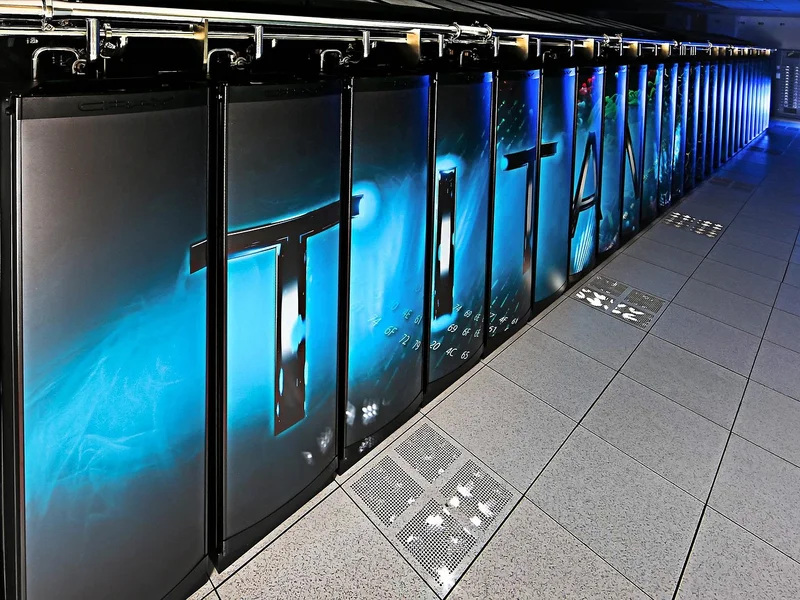
To understand the magnitude of the current crisis, one must look at the sheer exponential curve of computational demand. Traditional cloud computing data centers, designed for streaming, e-commerce, and enterprise software, typically operated on rack densities of 5 to 10 kilowatts (kW). In stark contrast, modern clusters optimized for generative AI workloads—utilizing arrays of advanced graphics processing units (GPUs)—frequently demand 40 to 100 kW per rack, with future iterations projecting densities well beyond 100 kW according to reports from the International Energy Agency (IEA).
This leap in intensity has broken historical scaling models. For over a decade, hyperscalers—such as Microsoft, Google, Amazon, and Meta—expanded their data center footprints largely unhindered by local utility limitations, provided they could secure fiber-optic connections and real estate. Today, the bottleneck has fundamentally shifted. The question is no longer whether a semiconductor foundry can stamp out enough wafers, but whether a substation can safely deliver the megawatts required to power them.
- Exponential Rack Density Growth: Standard server racks require 5–10 kW, while AI-optimized clusters demand 40–100+ kW.
- Capital Efficiency Collapse: Multi-billion-dollar hyperscale data centers sit idle or underutilized when local utilities cannot supply timely interconnections.
- Geopolitical Vulnerabilities: Energy infrastructure bottlenecks translate directly into sovereign tech stagnation.
The macro implications of this shift are profound. Energy constraints have transcended the realm of localized utility management to become a direct threat to corporate earnings and sovereign competitiveness. When a hyperscaler signs a multi-billion-dollar lease for a new data center campus only to discover that the local grid cannot supply power for five years, capital expenditure efficiency plummets.
Furthermore, because AI capabilities are now deeply intertwined with national security, economic productivity, and geopolitical dominance, a lack of power infrastructure translates directly into strategic vulnerability. According to industry analyses by BloombergNEF, managing this transition will require unprecedented capital deployment into power assets. The global tech stack is hitting a physical wall, and the market is only beginning to price in the consequences.
2. Hyperscalers vs. The Grid: The Race for Baseload Capacity
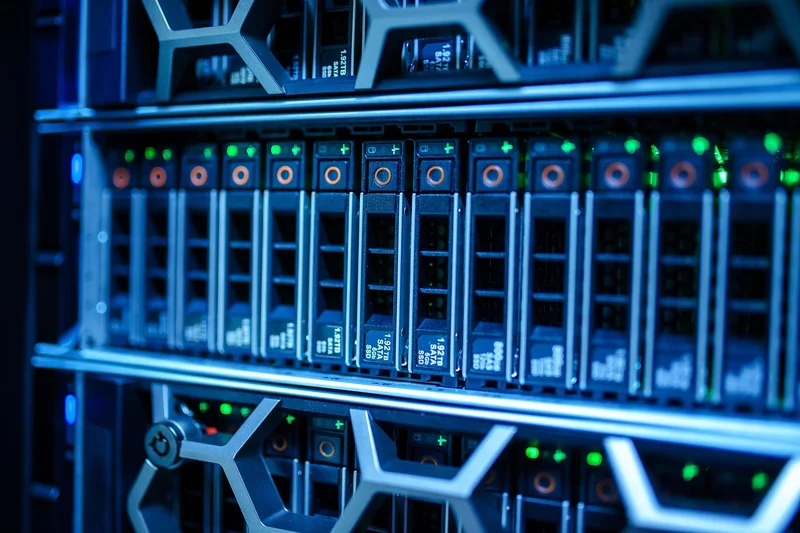
The collision between Big Tech and legacy electrical grids is creating unprecedented friction. AI data centers cannot run on intermittent power alone; they require uninterrupted, 24/7 baseload capacity. Model training runs that take months cannot afford the financial devastation of a sudden power trip.
Consequently, hyperscalers are aggressively bypassing traditional utility procurement methods, seeking to lock down dedicated power sources before their competitors do. This insatiable demand has exposed severe vulnerabilities in aging national power grids. In critical tech hubs—such as Northern Virginia’s “Data Center Alley,” monitored closely by regional transmission organizations like PJM Interconnection—local utilities are sounding the alarm over grid stability. The looming threat of rolling brownouts, transformer shortages, and skyrocketing Power Purchase Agreements (PPAs) threatens to erode profit margins not just for tech companies, but for legacy enterprises dependent on stable, affordable electricity.
This dynamic has sparked fierce industrial competition. AI data centers are now directly competing with traditional heavy industry, manufacturing sectors, and residential consumers for power access. When a technology conglomerate outbids local municipalities for clean energy credits or secures the output of an entire power plant, consumer utility rates rise, breeding political backlash and regulatory scrutiny.
Regulators are increasingly forced to ask a difficult question: Should scarce electrical capacity be allocated to power residential homes and local manufacturing, or should it feed energy-hungry language models designed to optimize digital advertising and enterprise software? This tension guarantees that energy security will remain a contentious political and economic battleground for the foreseeable future.
3. The New Alpha Playbook: Overweighting Nuclear and Grid Infrastructure
For sophisticated asset managers, this crisis presents a clear call to action: the creation of a new alpha playbook centered on energy infrastructure, grid modernization investments, and specialized power generation.
Chief among these themes is the nuclear renaissance. Because solar and wind energy, while vital, remain intermittent and heavily dependent on geographic and weather conditions, they cannot single-handedly solve the baseload dilemma for hyper-dense AI facilities. As a result, nuclear energy has emerged as the ultimate hedge for data center uptime.
We are witnessing a structural return to nuclear power, highlighted by tech giants partnering directly with nuclear plant operators to restart decommissioned reactors. Simultaneously, venture capital and corporate balance sheets are pouring hundreds of millions of dollars into Small Modular Reactors (SMRs) for data centers. These factory-built, scalable nuclear units offer the holy grail for AI infrastructure: localized, carbon-free, baseload power deployed directly adjacent to data center campuses, bypassing congested transmission lines altogether.
Beyond generation, the crisis has highlighted the urgent need for grid modernization. Investment opportunities are surging across several critical sub-sectors:
- High-Voltage Transmission: Upgrading long-distance transmission lines to move power from remote generation sites to urban tech hubs.
- Smart-Grid Technology: Implementing AI-driven grid management systems to balance load distribution and prevent failures.
- Energy Storage Solutions: Scaling grid-scale battery storage and long-duration energy storage (LDES) to buffer against supply fluctuations.
Capital is rapidly rotating away from vulnerable, energy-constrained software plays and redirecting toward specialized energy assets that guarantee supply security. In the new economy, energy providers are the new kingmakers.
4. Strategic Imperatives for Tier-One Allocators and Sovereign Wealth Funds

As the energy crisis deepens, portfolio strategy must evolve. Tier-one allocators, private equity firms, and sovereign wealth funds can no longer afford to treat energy as a mere operational overhead cost; it must be treated as a core asset class underpinning digital infrastructure. Insights from macroeconomic overviews by firms like McKinsey & Company emphasize that digital infrastructure and energy systems are now inextricably linked.
For institutional portfolios, this requires a decisive realignment. Allocators must systematically underweight legacy tech companies that lack dedicated, secure energy supply agreements while overweighting vertically integrated players and pure-play energy infrastructure assets. Companies that own or control their power sources—particularly those with long-term nuclear or clean-energy contracts—possess an unassailable economic moat.
On a macroeconomic scale, this challenge extends directly to sovereign wealth funds and national governments. Nations that fail to secure AI-ready energy infrastructure risk falling behind in the global geopolitical hierarchy. A country’s sovereign AI capability is strictly bounded by its megawatt capacity. If a nation’s grid cannot support the training of frontier foundational models, its domestic industries, defense systems, and scientific research sectors will inevitably depend on foreign technological superpowers. Consequently, sovereign wealth funds are increasingly deploying capital into domestic grid revamps and next-generation nuclear projects as an act of economic self-defense.
Frequently Asked Questions (FAQ)
Why are AI data centers causing a global energy crisis?
AI data centers require significantly more power than traditional cloud infrastructure because generative AI training relies on dense arrays of power-hungry GPUs. As hyperscalers scale compute clusters to train trillion-parameter models, local electrical grids struggle to provide the necessary baseload capacity, leading to localized power shortages and rising electricity costs.
How do data centers secure power from nuclear energy?
Tech companies are increasingly signing direct Power Purchase Agreements (PPAs) with nuclear plant operators to secure 24/7 carbon-free baseload energy. Some firms are also investing directly in Small Modular Reactors (SMRs) for data centers to generate dedicated, on-site electricity without relying on public transmission lines.
What are the top investment opportunities emerging from the AI energy crunch?
Investors are shifting focus toward energy infrastructure and grid modernization investments. Key growth areas include nuclear energy developers, SMR technology startups, high-voltage transmission equipment manufacturers, and grid-scale energy storage providers.
How does grid modernization support artificial intelligence expansion?
Grid modernization integrates smart-grid technologies, AI-driven load balancing, and upgraded transmission lines to efficiently route electricity from generation sites to high-density tech hubs, preventing blackouts and stabilizing wholesale power prices.
The Road Ahead
For C-suite strategists, enterprise leaders, and institutional investors, the mandate is clear. The AI data center energy crisis is not a temporary bump in the road; it is the defining structural bottleneck of this technological cycle.
Future-proofing investments requires breaking down the traditional silos between the technology sector and the energy sector. Success will not belong to the company with the cleverest algorithms alone, but to the enterprise that secures the electrons required to run them. By aligning capital with the realities of kilowatt scarcity, forward-looking allocators can insulate their portfolios against systemic shocks and capture the immense upside of the next phase of the digital revolution.