Why AI is Running Out of Power (And How It Fixes It)
1. The Silicon Wall: Why Megawatts Have Replaced Microchips as the Ultimate Bottleneck
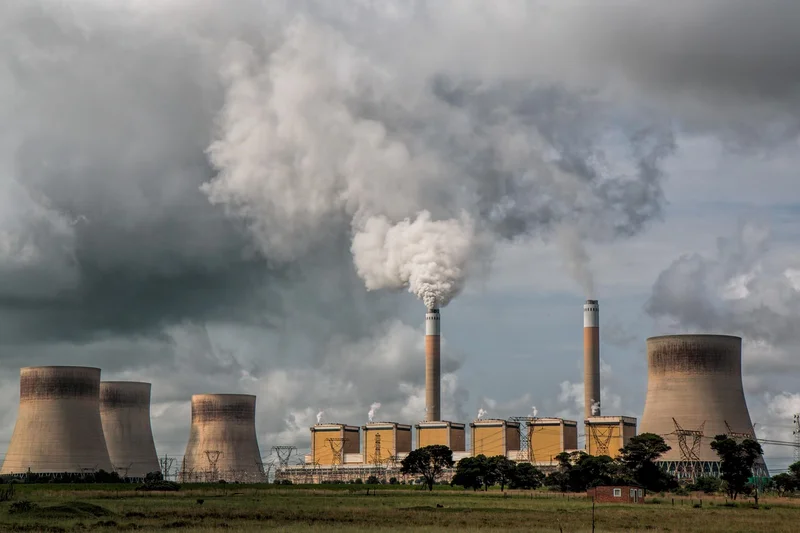
For the past decade, the technology sector has operated under a singular, sacred law of physics and economics: if you can design a faster semiconductor, the market will build the infrastructure to house it. From the rise of cloud computing to the explosive dawn of generative artificial intelligence, the ultimate constraint on technological progress was silicon. Venture capitalists, hyperscalers, and sovereign funds poured trillions of dollars into fab capacity, lithography machines, and advanced packaging. The bottleneck was ingenuity, chemistry, and manufacturing precision.
That era has officially drawn to a close.
Today, the primary constraint on the expansion of artificial intelligence is no longer the microchip; it is the megawatt. The exponential scaling of Large Language Models (LLMs)—driven by ever-larger parameter counts, massive reinforcement learning loops, and multimodal inference pipelines—has triggered an unprecedented surge in data center energy consumption. A single query to a generative AI model can consume up to ten times the electricity of a traditional keyword search. When scaled across billions of daily interactions and the continuous training runs of frontier models, the numbers transition from staggering to astronomical.
Data centers that were designed to draw 15 to 30 megawatts (MW) a decade ago are now being obsolete-engineered by next-generation campuses demanding 300 MW to over 1 gigawatt (GW) of continuous, uninterrupted power. To put that in perspective, a single 1-GW data center consumes as much electricity as roughly 800,000 American households.
This structural power deficit threatens to slam the brakes on data-center deployment globally. Hyperscalers like Microsoft, Google, Amazon, and Meta find themselves sitting on billions of dollars worth of advanced H100 and B200 GPUs that they cannot fully deploy because local power grids simply cannot hook them up. Substations are overloaded, transmission lines are congested, and baseload generation capacity is maxed out.
For the financial markets, this physical reality forces a profound valuation reckoning. For years, pure-play software companies and hyperscalers have enjoyed premium valuations based on the assumption of infinite, frictionless scalability. Code can be copied infinitely at near-zero marginal cost. However, when software runs up against the hard physical limits of the laws of thermodynamics and the electrical grid, the underlying unit economics change dramatically. Investors are beginning to realize that the AI revolution cannot outrun the physical capacity of the electrical grid. The silicon wall has been hit, and the wall is made of copper, steel, and uranium.
2. The Great Macro Rotation: Capital Flees Software for Hard Power
As the physical limits of the digital world become glaringly apparent, a massive structural shift is underway across global macro liquidity. For years, the path of least resistance for capital allocation was simple: overweight software, underweight heavy industry. Tech monopolists generated astonishing free cash flows, while traditional energy and utility sectors were dismissed by growth-oriented allocators as low-margin, heavily regulated, and unexciting.
The AI energy crisis has shattered this paradigm. We are witnessing the early stages of a historic macro rotation, as smart money flees over-leveraged software and asset-light tech plays to secure stakes in “hard power.”
Capital is aggressively migrating toward cyclical energy incumbents, nuclear utilities, and grid infrastructure stocks. Why? Because in an energy-starved AI economy, the owner of the power generation asset holds the ultimate pricing power. A hyperscaler cannot simply code their way around a blackout; they must secure reliable, 24/7 baseload power at scale.
This dynamic has elevated nuclear power purchase agreements (PPAs) from dry, behind-the-scenes utility contracts into the most critical strategic assets in the tech ecosystem. We are witnessing unprecedented corporate maneuvers: tech giants bypassing traditional utility procurement to directly finance, restart, or contract dedicated power plants—including nuclear facilities.
Consider the recent scramble for nuclear energy. Because wind and solar are intermittent and battery storage technology is not yet economically viable at multi-gigawatt scale for continuous baseload power, data-center operators are turning to nuclear fission. Nuclear power offers zero-carbon, high-reliability, 24/7 baseload energy. Tech titans are locking up nuclear generation capacity directly through long-term Power Purchase Agreements (PPAs), effectively cutting off traditional industrial and residential users from those power sources.
This capital migration signals a broader philosophical shift in global markets. Intangible assets are taking a back seat to tangible, physical infrastructure. The market is waking up to the reality that the digital economy is, at its core, an energy economy disguised as software.
3. Electrifying the Next Industrial Revolution: The Infrastructure Super-Cycle
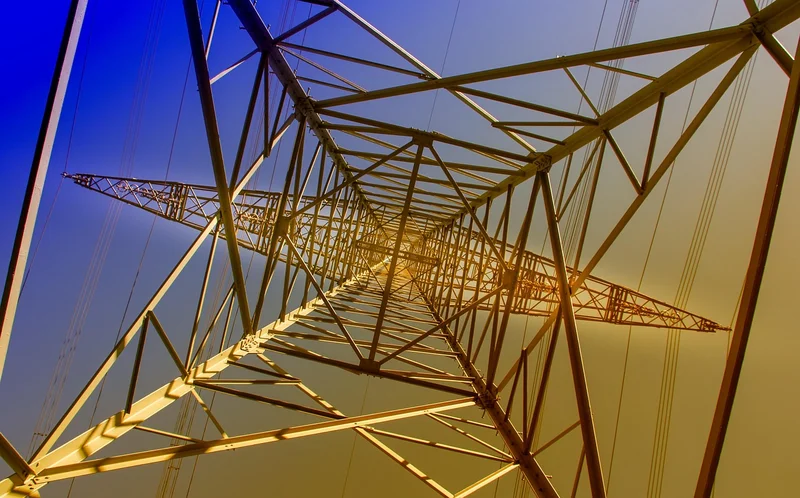
The mismatch between soaring AI electricity demand and stagnant grid capacity has ignited a multi-decade infrastructure super-cycle. Overhauling the electrical grid is not as simple as flipping a switch; it requires an unprecedented mobilization of capital, engineering talent, and raw materials.
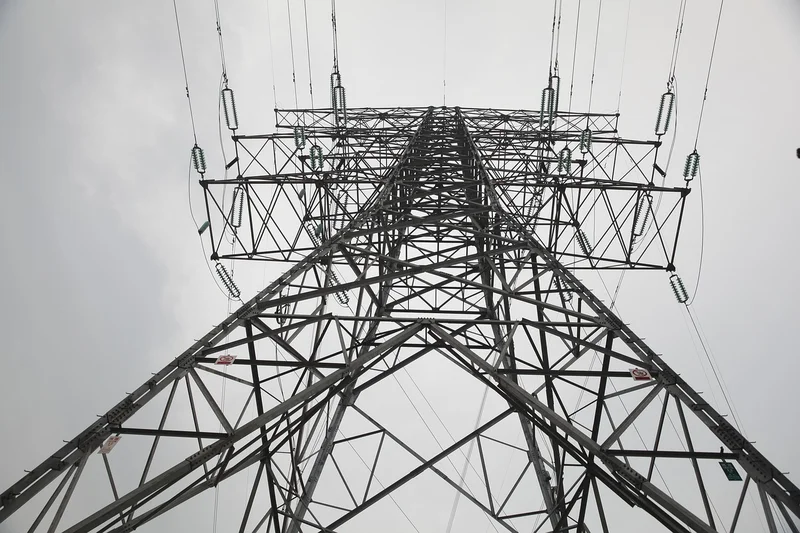
To understand the scale of this capital expenditure super-cycle, one must examine the anatomy of the grid. Most Western power grids were built decades ago to handle decentralized, predictable residential and light-industrial demand. They were never designed to transmit massive, localized blocks of gigawatt-scale power to clustered server farms.
The physical bottlenecks are severe and multi-layered:
- Baseload Generation: Building new natural gas, geothermal, or nuclear plants requires years of planning, environmental reviews, and immense capital outlays. The lead times for bringing new generation online vastly outpace the rapid release cycles of AI hardware.
- High-Voltage Transmission: Power is rarely generated where data centers want to be built. Transporting electricity across hundreds of miles requires new high-voltage direct current (HVDC) transmission lines—an arena plagued by “NIMBYism” (Not In My Backyard), lengthy permitting processes, and protracted land-acquisition disputes.
- Transformer Manufacturing: A critical, yet historically overlooked, bottleneck is the humble electrical transformer. Global manufacturing capacity for large power transformers (LPTs)—essential for stepping voltage up and down across the grid—is severely constrained, with lead times stretching out to three to four years.
Navigating these regulatory hurdles and policy shifts is the defining challenge for energy developers today. Government agencies are under immense pressure to streamline permitting for energy projects that serve national security and technological competitiveness goals. However, balancing the urgent demands of the AI boom with environmental regulations and consumer ratepayer protections will require delicate legislative and regulatory navigation. The countries and regions that solve these friction points first will capture the lion’s share of the global AI economy; those that lag behind risk severe deindustrialization and technological stagnation.
4. Playbook for Allocators: Where to Find Alpha in the Power Deficit
For Chief Investment Officers, sovereign wealth allocators, and macro hedge fund managers, the data center power shortage is not a risk to be feared—it is a generational alpha-generation event. The traditional playbook of simply buying the “Magnificent Seven” and hoping for linear growth is broken. Allocators must fundamentally rethink their exposure models and move upstream in the supply chain.
Shift from Downstream to Upstream
Stop chasing hyperscalers whose margins are increasingly compressed by rising energy costs and massive capital expenditures. Instead, look upstream to the enablers of the physical infrastructure. The real pricing power resides with the entities that own the electrons, the grid components, and the generation assets.
Target Nuclear and Baseload Utilities
Regulated and unregulated utilities with exposure to nuclear, modern natural gas, and hydroelectric generation are prime targets. Look for utility companies that are aggressively signing direct, long-term PPAs with hyperscalers at premium rates. These contracts provide cash-flow visibility that traditional utilities have not enjoyed in decades, creating a structural rerating potential for their equities.
Play the Industrial Grid Supply Chain
The picks-and-shovels play of the AI boom is no longer just semiconductor equipment; it is electrical equipment. Invest in global industrial leaders manufacturing transformers, switchgear, high-voltage cables, grid-automation software, and substation components. Order books for these companies are already bursting at the seams, providing high revenue visibility well into the 2030s.
Risk Management and Allocation Frameworks
When positioning for the electrification of AI, allocators must remain mindful of regulatory and policy risk. Utility stocks are sensitive to interest rate fluctuations and regulatory interventions designed to protect residential ratepayers from surging electricity bills. Consequently, a diversified portfolio must balance regulated utilities (offering defensive stability and steady dividends) with unregulated IPPs (Independent Power Producers) that can capture the explosive, un-capped upside of merchant power pricing in undersupplied regional transmission organizations (RTOs).
Conclusion
The narrative that software will eat the world is being rewritten. Software is consuming energy at a pace that the physical world is struggling to provide. For allocators willing to look past the glowing screens of Silicon Valley and invest in the heavy, unglamorous world of megawatts, transformers, and turbines, the rewards will be immense. The future of artificial intelligence will not be decided solely in code repositories, but in power plants and sub-stations.
To dive deeper into navigating this paradigm shift, explore our comprehensive Clean-Tech and Energy Stock Investment Reports to position your portfolio for the infrastructure super-cycle today.