The Trillion-Dollar Bet: Inside the AI Chip Infrastructure Boom

For the past decade, global financial markets operated under a predictable macroeconomic rhythm. Central bank liquidity, sovereign debt yields, and the constant hum of digital software expansion dictated asset allocation strategies. Today, that rhythm has been fundamentally disrupted. We have entered a high-beta capital expenditure supercycle unlike anything seen since the dawn of the internet or the electrification of the global economy.
At the epicenter of this shift is artificial intelligence chip infrastructure spending. Hyper-scalers, sovereign funds, and enterprise conglomerates are committing hundreds of billions of dollars to acquire specialized silicon, construct next-generation data centers, and secure the power grids necessary to run them. For institutional investors, portfolio managers, and financial advisors, this is not merely a technology trend—it is a structural reconfiguration of global liquidity, supply chain dominance, and enterprise risk.
As market participants search for clarity amid macroeconomic shifts and fluctuating monetary policy, understanding the mechanics of AI infrastructure investing and the intricacies of the global semiconductor supply chain has become paramount for generating alpha.
1. The Great Liquidity Shift: How AI CapEx is Reshaping Global Markets
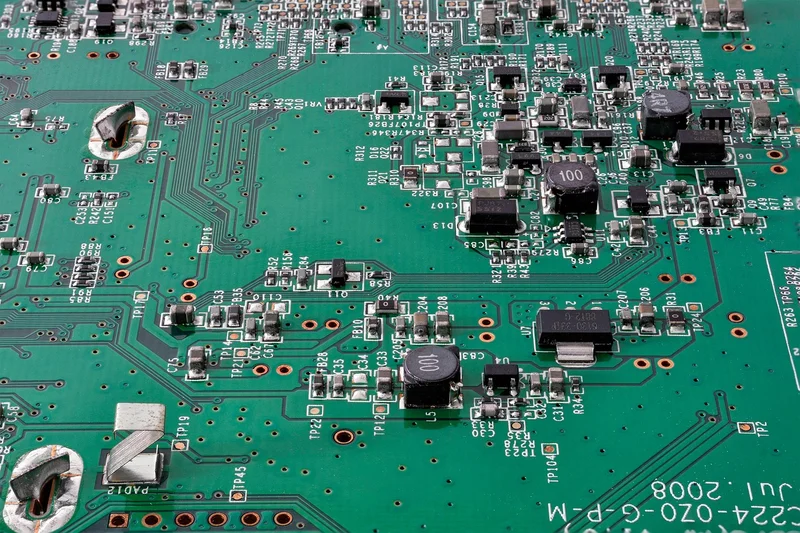
To understand current market dynamics, we must first examine the macro catalyst: the unprecedented capital expenditure (CapEx) commitments made by the world’s leading technology platforms. Meta, Microsoft, Alphabet, Amazon, and Apple are no longer merely competing for digital ad revenue or cloud computing market share. According to recent macro analyses from the International Monetary Fund (IMF), unprecedented corporate investments are shifting global financial flows. These firms are engaged in an arms race for artificial general intelligence, pouring historic sums into high-performance computing clusters built around specialized AI accelerators.
This spending has triggered a massive capital diversion across global balance sheets. For years, institutional capital flowed predictably into traditional safe-haven sovereign debt markets, treating government bonds as the ultimate risk-free rate of return. However, the sheer velocity of AI infrastructure demand has forced a pivot. Corporations are drawing down cash reserves, issuing investment-grade corporate debt specifically earmarked for AI buildouts, and shifting retained earnings away from defensive allocations and share buybacks into aggressive, high-beta physical and digital infrastructure.
This transition marks a new macroeconomic regime. We are moving away from an era defined by monetary policy dominance and low-beta stability into a period driven by high-beta technology capex cycles. For asset allocators, this means the traditional correlation matrices between equities and fixed income are breaking down. When multi-billion-dollar infrastructure decisions are made independently of prevailing interest rate cycles, market participants must re-evaluate how liquidity sloshes through the financial system. The risk is no longer just inflation or interest rate hikes; it is the opportunity cost of being under-allocated to the foundational physical layers of the AI economy, weighed against the systemic hazard of funding a potential capital misallocation bubble.
To track how central bank liquidity interacts with these corporate balance sheet strategies, institutional managers frequently cross-reference data from the Federal Reserve Bank of St. Louis (FRED) to gauge corporate debt issuance trends against prevailing interest rate environments.
2. Upstream Winners: Why Asset Allocators Must Overweight Foundries and Advanced Packaging

In every historical gold rush, the most reliable profits are captured not by the prospectors digging in the dirt, but by the merchants selling the pickaxes. In the current AI supercycle, those merchants are semiconductor foundries, equipment manufacturers, and advanced packaging facilities.
For institutional portfolios, strategic overweighting of the upstream hardware supply chain is no longer optional—it is the primary driver of alpha in technology allocations. The fundamental reason lies in the mechanics of the supply chain: a severe, structural bottleneck advantage. While downstream software companies can pivot, merge, or alter their pricing models overnight, the physical production of bleeding-edge AI accelerators is constrained by the laws of physics, geopolitical concentration, and extreme manufacturing complexity. Comprehensive industry metrics and supply chain forecasts published by Semicondutor Industry Association (SIA) consistently highlight the immense capital intensity required to maintain these manufacturing nodes.
Consider the role of advanced packaging (such as Chip-on-Wafer-on-Substrate or CoWoS technology). As traditional Moore’s Law scaling slows down, the industry has relied on stacking silicon dies vertically and horizontally to increase compute density and memory bandwidth. These advanced packaging techniques are not easily commoditized. They require billions in capital investment, decades of specialized engineering knowledge, and pristine execution. Consequently, the handful of entities controlling this manufacturing layer possess ultimate pricing power. They can pass rising input costs directly to hyper-scalers, insulating their profit margins even during broader economic downturns.
For asset allocators, positioning portfolios here requires a deliberate shift away from software-heavy allocations toward specialized hardware, semiconductor equipment makers, and materials science firms. These upstream players are insulated from the immediate commercial pressures of whether generative AI applications are monetizing successfully. As long as the global race for compute continues, the toll must be paid at the foundry gate.
3. The Downstream Squeeze: Hedging Margin Compression in Enterprise Adopters

While the upstream hardware providers enjoy unprecedented pricing power, the story changes dramatically as we move down the value chain. Enterprise adopters—the Fortune 500 companies, financial institutions, healthcare providers, and industrial conglomerates rushing to integrate AI into their operations—are facing a looming financial hazard: the downstream squeeze.
The cost of adoption is staggering. Integrating large language models and proprietary machine learning workflows requires heavy capital investment in cloud computing contracts, specialized software licenses, data curation, and continuous model retraining. For many traditional businesses, the immediate result is not efficiency, but severe margin compression.
This creates a stark divergence between value creation and value destruction. Portfolio managers must rigorously separate companies that are successfully monetizing AI—using it to automate core workflows, expand operating margins, and create defensible moats—from those merely absorbing exorbitant infrastructure costs to chase a marketing trend. Companies that blindly deploy capital into AI integrations without a clear path to return on invested capital (ROIC) will see their free cash flow deteriorate.
To protect institutional portfolios against this impending margin compression, risk managers must deploy targeted hedging strategies. This includes underweighting capital-intensive legacy sectors that attempt to transform into software-like entities without the underlying tech margins. Furthermore, portfolio overlays—such as pairing long positions in upstream semiconductor leaders with short or defensive hedges on enterprise sectors burdened by high IT infrastructure expenditure—can insulate portfolios from the earnings revisions that will inevitably hit over-leveraged adopters.
4. Separating Signal from Noise: Navigating Sustainable Demand vs. Speculative Overcapacity

The central anxiety haunting institutional boardrooms today is the specter of overcapacity. Whenever capital expenditure scales at an exponential rate, historical precedent warns of a subsequent bust. The telecommunications fiber-optic boom of the late 1990s serves as a cautionary tale: trillions of dollars were spent laying infrastructure to meet perpetual demand growth, only for a massive supply glut to bankrupt carriers and devastate equity holders when demand lagged projections.
Are we witnessing a similar speculative bubble in AI infrastructure? Navigating this question requires distinguishing between speculative excess and genuine, revenue-generating structural demand.
We must monitor specific warning signs of systemic credit risks tied to unchecked infrastructure spending. Are hyper-scalers funding data centers through sustainable free cash flow, or are they leaning excessively on debt markets? Are smaller startups building out GPU clusters backed by venture capital that relies on circular financing loops? When hardware purchases are financed by entities whose own revenue models remain unproven, the risk of a domino effect across the credit markets multiplies.
However, a structural argument counters the 1990s telecom parallel: AI infrastructure is productive capital, not passive bandwidth. Unlike dark fiber sitting idle under the ocean, AI chips can be continuously utilized for inference, scientific research, drug discovery, and automated optimization. Even if training demand plateaus, the inference market—running models for billions of daily active users—has barely scratched the surface of its potential compute requirements.
Portfolio Survival Playbook for Asset Allocators
To survive and thrive through this cycle, investors should apply a disciplined evaluation framework:
- Audit the Balance Sheet Quality: Favor hyper-scalers and enterprises funding their AI CapEx through robust organic cash flows rather than aggressive leverage.
- Trace the Compute Revenue Realization: Invest where AI initiatives show direct, measurable top-line acceleration or cost reduction within 12 to 18 months, rather than vague long-term promises.
- Diversify Across the Infrastructure Stack: Maintain exposure to the structural bottlenecks (foundries, advanced packaging, specialized power grid providers) while remaining highly selective on downstream application layers.
- Stress-Test for Demand Slumps: Model portfolio performance under a scenario where enterprise AI adoption cycles slow down by 30%, ensuring downside protection against temporary digestion phases in the hardware market.
5. Frequently Asked Questions: Navigating the AI Chip Infrastructure Supercycle
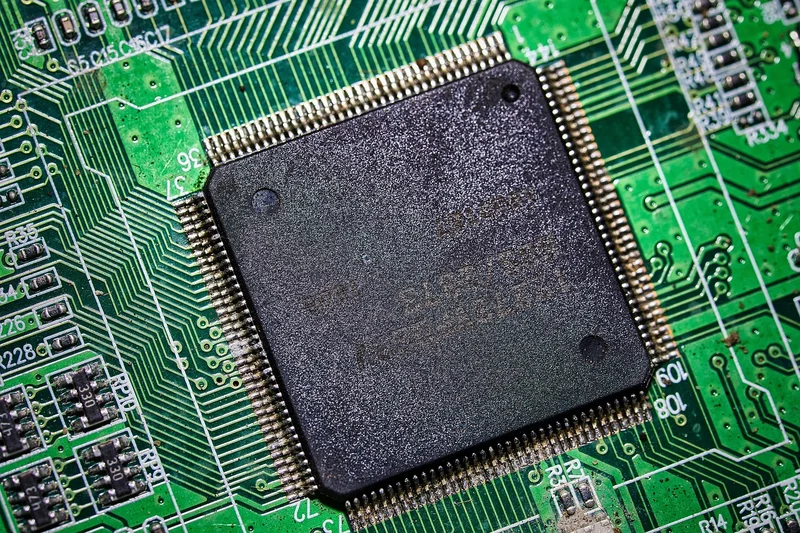
To assist financial advisors, institutional allocators, and individual investors in synthesizing these market dynamics, here are answers to core questions regarding the current technological and economic supercycle:
Is the AI infrastructure boom a speculative market bubble?
While capital expenditure has reached historic levels, fundamental differences separate the current AI buildout from past manias like the 2000 dot-com crash. Unlike idle telecommunication fiber optics, AI silicon and data center compute clusters generate immediate operational utility through data processing, machine learning model training, and real-time enterprise inference. However, valuation discipline remains vital; investors must carefully separate companies with sustainable free cash flow from over-leveraged entities relying on speculative financing loops.
How can institutional investors gain exposure to the AI chip supercycle?
Institutional portfolios typically gain exposure by targeting the upstream hardware supply chain where pricing power is concentrated. This includes semiconductor foundries, advanced packaging facilities, specialized electronic design automation (EDA) software providers, and critical power grid infrastructure suppliers. Overweighting these structural bottlenecks provides a defensive buffer against potential volatility in downstream enterprise software applications.
What are the primary macroeconomic risks facing semiconductor stocks?
Key risks include geopolitical tensions impacting overseas manufacturing foundries, sudden shifts in central bank monetary liquidity tightening credit conditions, and potential digestion phases where hyper-scalers temporarily pause hardware purchases to optimize existing compute clusters. Portfolio managers mitigate these risks through rigorous balance sheet audits and strategic hedging overlays.
How does advanced packaging influence chip manufacturing profitability?
Advanced packaging (such as CoWoS) enables multiple silicon dies to be integrated closely together, overcoming the physical limitations of traditional Moore’s Law scaling. Because these specialized manufacturing techniques require immense capital, engineering expertise, and cleanroom infrastructure, the few firms that control this layer maintain exceptional pricing power and insulated profit margins.
Conclusion

The AI chip infrastructure spending boom is the defining macroeconomic and financial narrative of our decade. It is a multi-year, multi-trillion-dollar capital reallocation that is redrawing the map of global corporate power. For asset allocators, standing on the sidelines is not a risk-free strategy; missing the structural buildout of the intelligence economy carries an immense opportunity cost.
Yet, navigating this terrain demands absolute discipline. By recognizing the liquidity shifts, overweighting the upstream structural bottlenecks, hedging the downstream margin squeeze on enterprise adopters, and ruthlessly separating sustainable demand from speculative froth, investors can position themselves not just to survive the great liquidity shift, but to capture its generational upside.