AI's Power Grid Meltdown: The Data Center Energy Crisis
For the past decade, institutional investors, venture capitalists, and equity analysts have treated software as an infinite resource. If you could code it, scale it, and monetize it, the market would fund it.
We are no longer living in that world.
The hyper-expansion of generative artificial intelligence has triggered a structural collision between the digital economy and the laws of physics. The narrative of the tech sector has officially pivoted from a software-driven growth story to a hard physical ceiling constrained by power generation. For portfolio managers and asset allocators, understanding this shift is no longer optional. The AI data center energy crisis is redefining the mechanics of valuation, threatening tech sector cash flows, and fundamentally rewriting the playbook for energy markets. This transition has placed AI infrastructure stocks, nuclear energy stocks for the AI boom, and data center power consumption stocks firmly at the center of modern portfolio construction.
1. The Hard Physical Ceiling: Why AI’s Software Bottleneck Just Became an Energy Crisis
To understand the current crisis, one must look at the sheer velocity of exponential scaling. Over the past five years, the compute requirements to train frontier AI models have doubled roughly every six months—vastly outpacing Moore’s Law and completely blowing past the infrastructure development timelines of the physical world.
For a long time, the industry’s bottleneck was algorithmic sophistication or access to specialized silicon, such as NVIDIA GPUs. Today, those hurdles, while still significant, are secondary to a much more fundamental constraint: electrons.
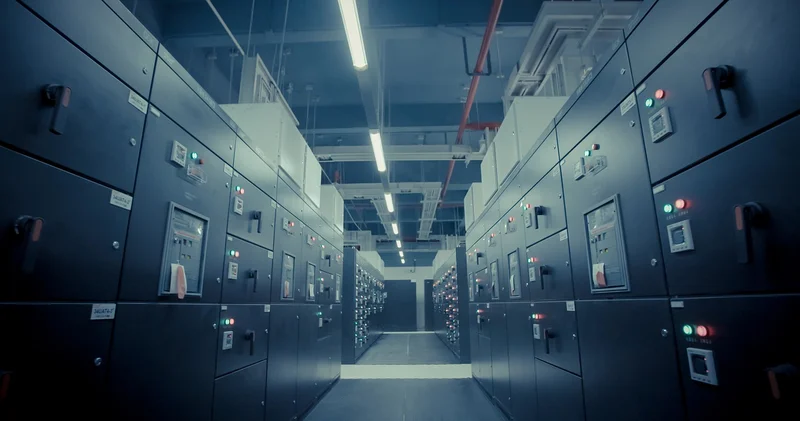
A single modern AI data center is no longer a collection of humming server racks; it is an industrial behemoth consuming hundreds of megawatts—and increasingly, gigawatts—of continuous power. To put this in perspective, training a next-generation large language model requires continuous energy loads equivalent to the consumption of mid-sized towns, running uninterrupted for months.
This marks a definitive transition from a software-driven bottleneck to a hard physical ceiling. For years, tech giants operated under the assumption that infrastructure would simply materialize to meet demand. Capital expenditure budgets were written with the expectation of linear scaling. Now, Hyperscalers—Microsoft, Alphabet, Amazon, and Meta—are finding that they can build all the server farms they want, but if the local grid cannot supply the power, those multi-billion-dollar clusters of high-performance chips will sit idle.
The financial implications of this physical ceiling are severe. When capital expenditures on cutting-edge silicon fail to yield revenue-generating compute cycles due to power shortages, return on invested capital (ROIC) plummets.
Furthermore, this directly threatens the projected free cash flows that justified astronomical tech valuations in the first place. Enterprise adoption curves—the very curves driving Wall Street’s long-term growth assumptions—now face a hard supply-side constraint. If software companies cannot secure guaranteed compute, and compute cannot secure guaranteed power, the entire narrative of perpetual, margin-expanding software growth hits an immovable wall.
2. The Power Struggle: Hyperscalers vs. Traditional Industrials in Energy Markets

As this realization sets in, a high-stakes turf war has broken out across energy markets. Big tech hyperscalers are no longer just competing against each other for chips and talent; they are aggressively outbidding traditional industrial giants—manufacturers, chemical plants, and heavy industry—for scarce Power Purchase Agreements (PPAs).
This dynamic has exposed a glaring vulnerability: the global energy grid is a fragile, legacy system entirely unequipped to handle the sudden, hyper-concentrated demand spikes of generative AI. For decades, grid operators planned for modest, predictable load growth of 1% to 2% annually. Suddenly, localized demand projections in regions like Northern Virginia (Data Center Alley), Texas, and parts of the Pacific Northwest are surging at double-digit rates year-over-year.
The economic friction of this power struggle is bleeding out into the public sphere. When a hyperscaler swoops in and locks up the output of a regional power plant through a multi-year corporate PPA, the remaining capacity for the broader municipality shrinks.
This dynamic creates severe socio-economic friction:
- Municipal power tariff surges: As localized grids strain to upgrade transmission lines and substations to feed these energy-hungry facilities, everyday commercial and residential ratepayers are seeing their utility bills spike.
- Regulatory and political backlash: Lawmakers are increasingly questioning the wisdom of diverting clean, reliable baseload power to train chatbots while local constituents face grid instability and higher heating bills.
State utility commissions are beginning to push back, forcing data center operators to either build their own dedicated generation assets or face lengthy interconnection queues that stretch well into the 2030s. The free-for-all era of plugging AI into the nearest wall socket is coming to an abrupt end.
3. Rewriting the Playbook: Repricing Utilities and Nuclear as High-Beta AI Plays
For institutional capital, this crisis demands a radical shift in perspective. For decades, traditional asset allocators viewed utilities, nuclear operators, and grid-infrastructure equities through a singular lens: defensive yield proxies. They were boring, bond-like instruments owned by income-focused investors looking for steady dividends and low volatility.
That playbook is obsolete.
We are witnessing a wholesale repricing of the energy sector, transforming it from a defensive safe-haven into a core, high-beta participant in the AI boom.
Consider the nuclear renaissance currently underway. Because AI data centers require 24/7 “baseload” power—unlike intermittent wind and solar, which require expensive battery storage to maintain continuous uptime—big tech has turned its gaze toward nuclear energy. Advanced solutions such as Small Modular Reactors (SMRs) are moving from theoretical designs to heavily funded deployment pipelines. Nuclear power plants offer carbon-free, high-capacity, uninterrupted power.
We have already seen unprecedented moves, such as tech giants partnering directly with nuclear plant operators to restart mothballed reactors or establish direct-wire campus agreements where the data center plugs straight into the nuclear source, bypassing the public grid entirely.
When a regulated utility company or a merchant nuclear operator signs a long-term, premium-priced PPA with a trillion-dollar tech titan, its earnings profile changes overnight. These businesses are no longer bound by slow-moving, state-approved rate increases. They have effectively become picks-and-shovels plays for the artificial intelligence revolution.
Smart money is no longer asking, “What is this utility’s dividend yield?” Instead, institutional analysts are asking, “What is this provider’s megawatt capacity, what is their interconnection timeline, and how much pricing power do they hold over desperate tech buyers?”
Energy is no longer a utility cost center for tech; it is the fundamental currency of compute.
4. Portfolio Realignment: Pivoting from Software Pure-Plays to Energy-Secured Infrastructure
For asset allocators navigating this new paradigm, capital allocation strategies must evolve. The traditional approach of buying a basket of software-as-a-service (SaaS) pure-plays and calling it an “AI portfolio” is dangerously myopic. It ignores the physical constraints dictating who actually wins the AI race.
Strategic portfolio realignment requires a calculated pivot:
1. Trim Exposure to Over-Leveraged Software Pure-Plays
Many application-layer software companies are trading at rich multiples while sitting on the downstream end of the compute supply chain. If their underlying cloud providers are forced to ration compute due to power constraints—or if rising energy costs compress cloud margins and get passed down to software developers—these pure-plays will see margin compression and multiple contraction. Prudent risk management dictates trimming overweight positions in software firms that lack proprietary compute moats or guaranteed energy access.
2. Allocate Capital Toward Energy-Secured Infrastructure Leaders
The real winners of the AI gold rush will not necessarily be the companies writing the final software applications, but the entities controlling the power supply. Portfolios should overweight:
- Clean baseload generation providers: Particularly nuclear operators with existing fleet assets and merchant capabilities.
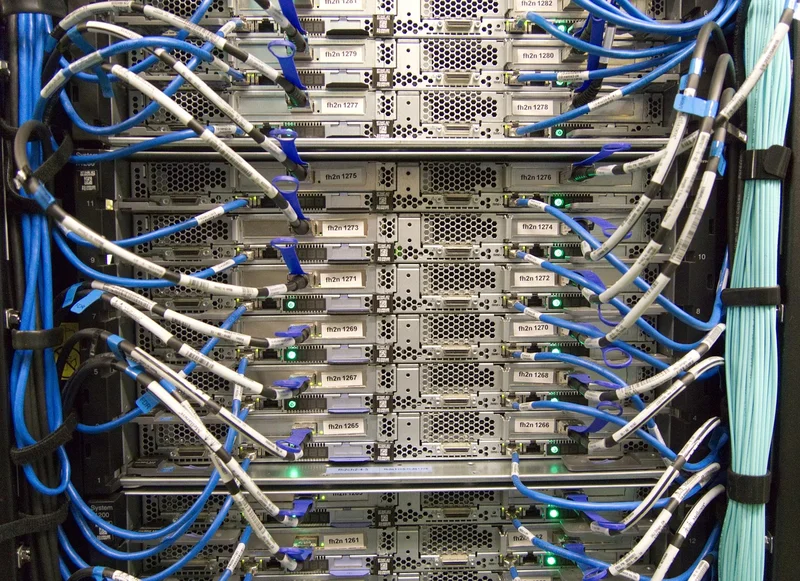
- Grid infrastructure and equipment manufacturers: Companies producing high-voltage transformers, switchgear, grid-stabilization hardware, and advanced cooling systems (liquid cooling solutions are mandatory for high-density AI chips).
- Next-generation energy innovators: Firms pioneering advanced geothermal and grid-scale storage solutions designed specifically to service localized enterprise loads.
3. Hedge Against Systemic Inflation Spikes
The massive capital expenditures required to upgrade the global electrical grid—running into the hundreds of billions of dollars—will inevitably spark inflationary pressures across commodities like copper, steel, and specialized engineering labor. Asset allocators must maintain structural hedges against inflation, ensuring that fixed-income duration risk is properly managed against a backdrop of structurally higher energy and infrastructure costs.
5. Frequently Asked Questions (FAQ)
How does the AI energy crisis affect tech stocks?
The AI energy crisis creates a supply-side bottleneck for technology companies. While hyperscalers like Microsoft, Google, and Amazon have billions to spend on chips, their growth is limited by physical power availability. If data centers cannot secure guaranteed power contracts, capital expenditures on hardware will fail to yield expected returns, leading to potential margin compression and multiple contraction across software and cloud equities.
Why are AI data centers turning to nuclear energy?
AI data centers require 24/7 continuous baseload power to operate machine learning clusters without interruption. Unlike wind or solar power, which are intermittent and depend on weather conditions, nuclear energy provides carbon-free, high-capacity, reliable power around the clock. This has driven major tech companies to invest directly in nuclear power plants and Small Modular Reactors (SMRs).
What are the best investment sectors to benefit from the AI power crunch?
Investors looking to capitalize on data center power demands are increasingly moving capital into AI infrastructure stocks, utilities with heavy nuclear exposure, grid equipment manufacturers (transformers and switchgear), and clean energy providers. These sectors are transitioning from defensive, low-growth dividend plays into high-beta participants in the artificial intelligence boom.
What is a Power Purchase Agreement (PPA) in the context of AI data centers?
A Power Purchase Agreement (PPA) is a long-term contract between an electricity generator and a power purchaser (in this case, an AI hyperscaler). Hyperscalers use PPAs to lock in massive blocks of dedicated green or nuclear energy directly from power producers, ensuring their data centers have the continuous megawatt capacity required to train advanced AI models.
Conclusion
The AI Data Center Energy Crisis is not a temporary growing pain; it is a permanent structural shift. The illusion of infinite, frictionless digital scaling has collided with the immutable laws of thermodynamics.
For the financial markets, this realization offers both a profound warning and a generational opportunity. The software pure-play era of the 2010s has given way to the physical-infrastructure era of the 2020s and beyond.
Investors who cling to old mental models—viewing software as destiny and energy as a boring utility—will find themselves on the wrong side of the ledger. Those who recognize that electrons are the ultimate limiter of artificial intelligence will successfully reposition their portfolios to capture the true, power-secured value of the AI revolution.