Why AI is Running Out of Power (And How It Fixes It)

For the past several years, the narrative surrounding the artificial intelligence revolution has been dominated by lines of code, algorithmic breakthroughs, massive parameter scaling, and the insatiable global demand for advanced silicon. Wall Street has priced in a frictionless digital future where data centers sprout like digital mushrooms, fueled by limitless venture capital and boundless computational optimism.
Yet, as we push further into this paradigm shift, a profound physical reality is setting in. The digital cloud requires earth, copper, gas, and, above all, continuous electrons.
We have officially arrived at the collision point between exponential software demand and the linear, highly constrained physics of the global electrical grid. The AI infrastructure energy crisis is no longer a distant theoretical hazard; it is the single greatest macro ceiling facing the technology sector today. For institutional investors, portfolio managers, and market strategists, understanding this bottleneck is no longer optional—it is the prerequisite for navigating the next decade of capital allocation.
AI Data Center Power Demand: Why Grid Capacity is the Ultimate Bottleneck
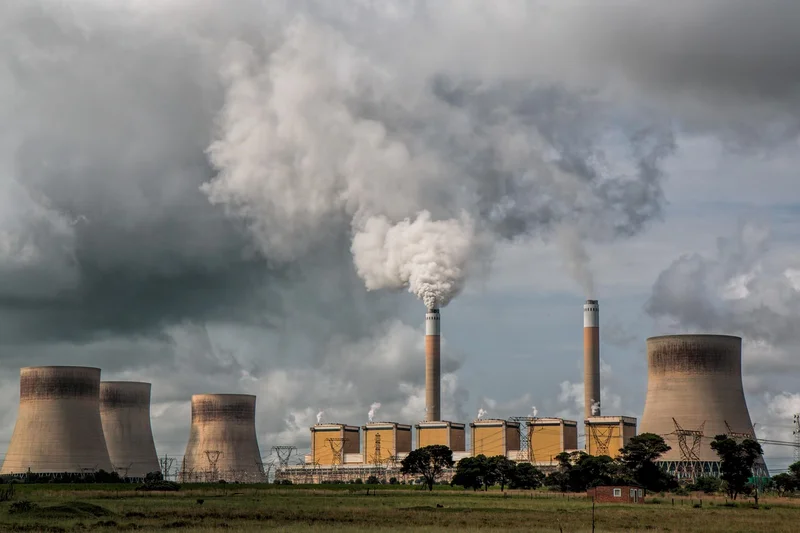
To understand the magnitude of the current energy crunch, one must first look at the sheer velocity of the hyperscaler capital expenditure (CapEx) cycle. Microsoft, Google, Amazon, Meta, and Apple are engaged in a generational arms race, collectively pouring hundreds of billions of dollars into data center construction and high-performance computing clusters.
However, this digital expansion is running headfirst into a hard resource constraint: the capacity of the electrical grid. According to data from the International Energy Agency (IEA), global electricity consumption from data centers, artificial intelligence, and cryptocurrency combined could double by 2026, reaching levels roughly equivalent to the total electricity consumption of a country like Japan.
Historically, the tech sector operated on a software-defined timeline. If you needed more computing power, you ordered more servers, spun up more cloud instances, and optimized your code. The physical world—specifically the generation, transmission, and distribution of electricity—was someone else’s problem, managed by sleepy, regulated regional utilities.
Today, that firewall has collapsed. AI workloads, driven by large language model training and real-time inference, require unprecedented rack densities. While a traditional cloud data center might draw 5 to 10 megawatts (MW) of power, modern AI data centers are being designed for 100 MW, 500 MW, and soon, full gigawatt (GW) scale. To put this in perspective, a single gigawatt-scale data center consumes roughly as much electricity as a medium-sized American city.
This creates a brutal economic friction. The tech sector’s balance sheets are hyper-liquid and capable of moving at the speed of light, but the physical infrastructure of the electrical grid moves at the speed of bureaucracy, environmental impact studies, and heavy industrial construction. High-voltage transformers have lead times stretching into years. Transmission line approvals can take over a decade.
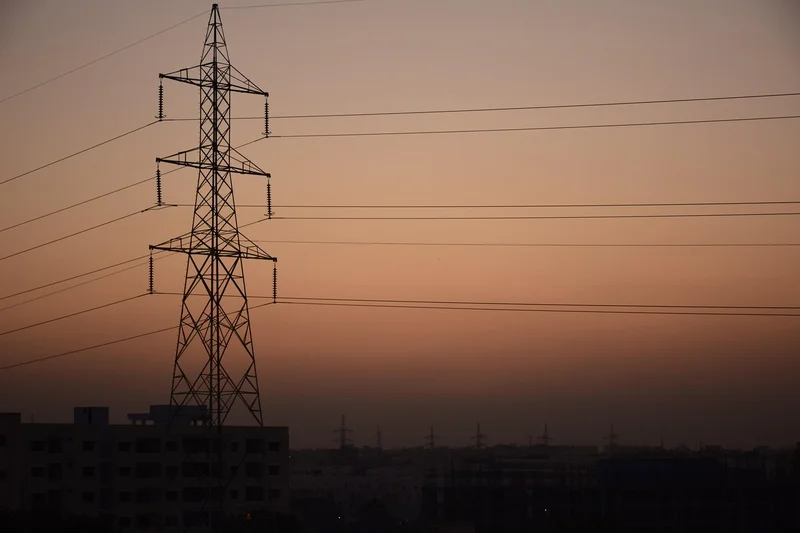
Consequently, electrical grid capacity bottlenecks are no longer just a localized engineering annoyance—they are redefining the speed of AI deployment. Silicon is sitting in warehouses, waiting for substations that cannot be built fast enough. The ultimate ceiling on the AI revolution is not algorithms, and it is not even the supply of lithography machines; it is the capacity of local power grids to keep the lights on.
The Great Tech Bifurcation: Monopolistic Pricing Power vs. Multiple Compression
As power scarcity transitions from a minor operational hurdle to a binding economic constraint, it will trigger a massive structural bifurcation within the technology sector. The market is moving away from a broad-based “rising tide lifts all boats” AI thesis toward a brutal zero-sum game dictated by energy access.
The Winners: Securing the Grid
The true winners of the AI supercycle will not simply be the companies with the best models; they will be the companies with the balance sheets and foresight to secure proprietary Power Purchase Agreements (PPAs) and baseload energy assets.
We are already witnessing a desperate race for next-generation nuclear energy. Tech giants are abandoning their pure-play green tech ambitions in favor of 24/7 reliability, striking direct deals with nuclear plant operators to secure dedicated, carbon-free baseload power. Companies that lock in long-term, below-market energy corridors will possess an insurmountable moat. They will operate their server farms continuously, efficiently, and without the threat of curtailment or crippling spot-market electricity prices. This energy security ties directly into broader renewable energy portfolios that institutional investors are monitoring closely.
The Losers: Margin Erosion and Multiple Compression
Conversely, under-powered peers face severe margin erosion and multiple compression. Imagine a mid-tier cloud provider or an enterprise AI upstart that has successfully trained a competitive model, only to find itself stranded in a power-constrained geography where local utilities refuse to hook up their new servers.
Without guaranteed power, these companies will be forced to buy electricity on volatile merchant markets, or worse, watch their expansion plans stall indefinitely. Wall Street is notoriously unforgiving of growth stagnation. As capital markets realize that certain tech companies cannot scale their compute capacity because they simply cannot plug their servers into a wall, their valuation multiples will compress rapidly. The market will separate energy-secure software monopolies from energy-starved pretenders. For investors navigating this shift, tracking cloud computing stocks with direct access to power infrastructure will be critical.
Grid Modernization Investments: Rewiring Institutional Portfolios for AI
For sovereign wealth funds, tier-1 pension portfolios, and institutional allocators, the AI energy crisis demands a radical pivot in asset allocation strategy. For the past decade, the playbook was simple: overweight software, overweight semiconductors, and ignore the unsexy world of industrials and utilities.
That playbook is now obsolete. The downstream and upstream derivatives of the AI energy crisis represent some of the most compelling macroeconomic investment opportunities of the next twenty years.
Shifting Focus to the Physical Layer
Institutional capital is beginning to flow aggressively out of pure software plays and into the underlying physical infrastructure that makes software possible. This includes:
- Localized Power Generation: Private equity and venture capital are pouring into small modular reactors (SMRs), advanced geothermal, and localized natural gas turbines designed to sit directly behind-the-meter alongside data centers, bypassing the public grid entirely.
- Grid Hardening and Equipment Manufacturers: The makers of heavy electrical equipment—high-voltage transformers, switchgear, circuit breakers, and copper cabling—are experiencing unprecedented demand pricing power. Companies that manufacture these boring, industrial components are suddenly trading with the margin profiles of high-growth tech darlings.
- Electrical Transmission: Upgrading the nation’s aging transmission corridors to move power from remote wind, solar, and nuclear sites to urban data center hubs requires trillions in capital expenditure. Public-private partnerships and specialized infrastructure funds are stepping in to finance these multi-year projects, locking in stable, bond-like yields backed by essential-service cash flows.
The smart money has recognized that you do not need to pick the winning AI application to profit from the boom; you simply need to own the tollbooths through which every single electron must pass on its way to a GPU.
Energy Storage and the New Utilities Blueprint for the AI Supercycle
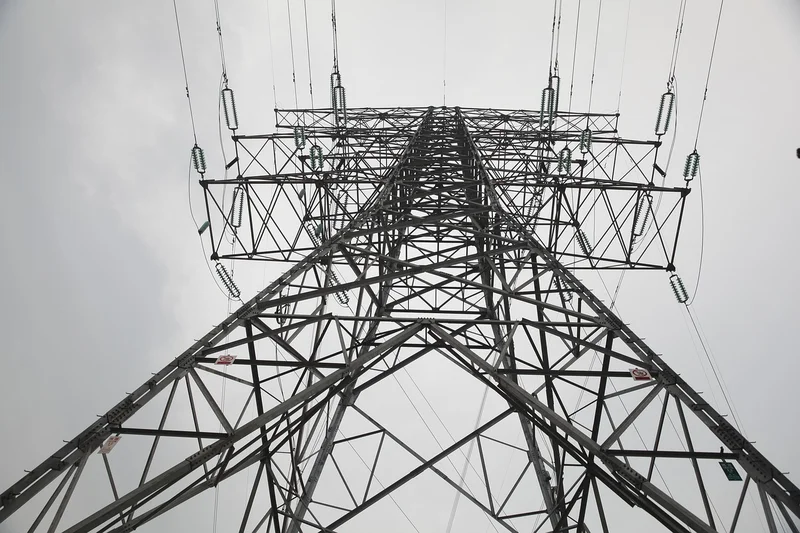
As we look toward the horizon, the intersection of artificial intelligence and energy infrastructure will permanently alter the identity of the modern utility company. Historically viewed as defensive, low-growth dividend plays for conservative income investors, utilities are transforming into the vanguard of the digital economy.
Bridging the Intermittency Gap
The fundamental challenge of powering AI is the mismatch between nature and silicon. AI data centers demand uninterrupted, 24/7 baseload power. A sudden drop in compute availability is catastrophic for model training runs that take months to complete. Yet, the cheapest and fastest-growing sources of new electricity—wind and solar—are inherently intermittent.
This is where advanced energy storage utilities step into the spotlight. The deployment of utility-scale battery energy storage systems (BESS), pumped hydro, and emerging long-duration storage technologies is no longer an environmental luxury; it is an absolute operational necessity. Utilities that can successfully bridge the gap between intermittent renewable generation and the relentless, unyielding demand of AI workloads will command massive premiums.
Power Generation as the New Kingmaker
We are witnessing the birth of a new corporate archetype: the tech-utility hybrid. We have already seen major technology firms partner directly with nuclear fleet operators, effectively bypassing the traditional regulatory compact of localized utilities to secure direct energy feeds.
In this new paradigm, power generation is the ultimate kingmaker. The companies that control the electrons will dictate the terms under which artificial intelligence evolves. If you control the power plant, you control the compute. If you control the compute, you control the intelligence.
Frequently Asked Questions About AI Energy Consumption
How much energy do AI data centers use?
AI data centers consume significantly more electricity than traditional cloud computing facilities. While standard data centers typically require between 5 to 10 megawatts (MW), modern AI-focused facilities are engineered for 100 MW to over 1 gigawatt (GW) of power capacity. A single gigawatt-scale data center uses roughly as much electricity annually as a medium-sized American city.
Why are tech companies investing in nuclear power?
Technology giants are turning to nuclear energy because artificial intelligence data centers require continuous, 24/7 baseload power to sustain massive model training runs. Unlike wind and solar energy, which are intermittent and depend on weather conditions, nuclear power provides a reliable, carbon-free baseload energy supply that guarantees uninterrupted operation.
What are grid modernization investments?
Grid modernization investments refer to the capital expenditures directed toward upgrading electrical transmission lines, building new high-voltage substations, deploying smart-grid technologies, and installing advanced battery energy storage systems (BESS). These investments are necessary to prevent power shortages and handle the massive surge in electricity demand driven by artificial intelligence and electric vehicle adoption.
Conclusion
The AI Infrastructure Energy Crisis serves as a sobering reminder that the digital world is inextricably tethered to the physical world. For years, the tech industry operated under the comforting illusion that cyberspace was boundless, weightless, and infinitely scalable.
The reality of the electrical grid has shattered that illusion.
As we navigate the remainder of this supercycle, the dividing line in the global economy will not just be between those who have data and those who do not, but between those who have power and those who are left in the dark. For investors, this crisis presents a clear mandate: look past the glowing screens of software interfaces, follow the heavy copper wires back to their source, and invest heavily in the generation and transmission of power. In the age of artificial intelligence, energy is the new currency.